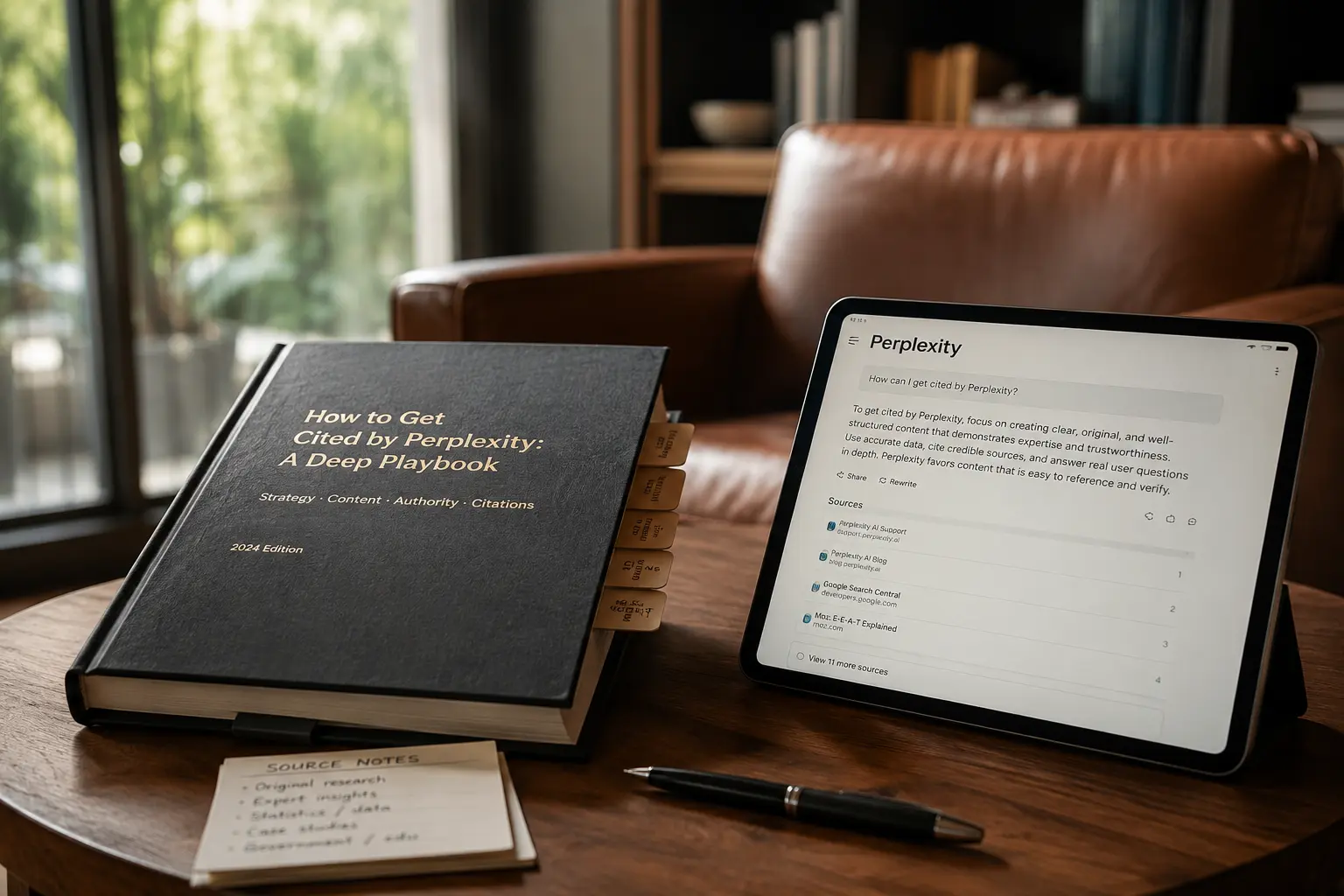
GenAI is reshaping Australian marketing now
AI is rapidly changing how Australian businesses attract customers, appear in search and compete online. As platforms like ChatGPT, Google AI Overviews, Gemini and Perplexity reshape how people discover information, traditional digital marketing becomes less effective on its own.
Ranking on Google is no longer the only goal; brands now need to become trusted sources that AI engines choose to reference, summarise and recommend, the heart of answer engine optimisation and generative engine optimisation.
For Australian brands, this is not a future trend waiting to arrive. It is already changing how consumers search, compare and decide. Businesses that adapt early, focusing on authority, trust and AI-ready content, will be far better positioned for the next generation of search and digital marketing, which is why AI in SEO is now a board-level conversation.
Understanding generative AI
At its core, generative AI refers to systems capable of creating new, original content. Unlike traditional AI that mainly analyses existing data, generative AI produces text, images, code and video based on patterns it has learned, acting like a creative partner that can draft campaigns, write product descriptions or surface trends.
Australia's national science agency, CSIRO, has been central to researching how these technologies can be applied responsibly across industries.
The potential is significant for marketing specifically, transforming everything from content discovery and personalised experiences to SEO, customer journeys and online visibility.
The shift matters because it changes not just how brands create content, but how that content is found, since AI increasingly mediates discovery, a dynamic we explore in optimising content for generative AI.
AI's rapid adoption in Australia
Australian businesses are not just experimenting with AI; they are actively embracing it, and surveys consistently place Australian adoption among the highest internationally, ahead of several comparable markets.
The federal Department of Industry, Science and Resources has set out national AI priorities recognising both the economic opportunity and the need for responsible adoption, signalling how seriously the shift is being taken.
Retail is leading the charge, with the large majority of retailers across Australia and New Zealand already investing in generative AI to create efficiencies, personalise experiences and drive growth.
The applications are tangible: furniture retailer Freedom has used AI to personalise advertising, while fashion platform The Iconic has leveraged visual search to improve discovery. As more organisations integrate these tools, the competitive landscape is being redrawn in favour of those who adapt quickly.
What AI-driven marketing looks like for Australian businesses
AI is no longer limited to automating repetitive tasks. Across Australia, businesses use it to improve customer experiences, personalise campaigns and make faster decisions from real-time data, combining behaviour, search intent and predictive analysis to deliver more relevant experiences across channels.
Platforms and research hubs like Think with Google and marketing technology providers such as Adobe document how personalisation and AI-assisted optimisation are reshaping the discipline.
In practice, AI-powered marketing influences personalised customer journeys, predictive content recommendations, conversational search experiences, campaign optimisation, automated segmentation and real-time behavioural analysis at once.
What matters most is the growing link between AI marketing and discoverability, since as search becomes conversational, businesses need content that directly answers nuanced questions in a natural, authoritative way, the foundation of strong search intent work.
The changing search landscape
One of the most significant impacts of generative AI is on search behaviour. The familiar ten blue links are giving way to dynamic, conversational experiences, with Google rolling out AI Overviews to a vast user base and providing synthesised answers directly at the top of the page.
User expectations are changing accordingly, with a growing share of consumers turning to tools like ChatGPT for product and service recommendations and posing questions in natural language rather than sifting through websites.
For brands, the implication is clear: if your content is not valuable enough to be cited in an AI-generated answer, your visibility will fall.
Simply ranking for a keyword is no longer enough, the goal is to become the trusted source AI relies on, which is exactly what optimising for AI Overviews and snippets and being cited by LLMs is about.
How Australian brands can improve AI search visibility
Appearing in AI-generated answers requires more than traditional SEO. While rankings still matter, AI engines increasingly prioritise content that demonstrates expertise, context, trust and direct relevance to intent.
AI search visibility refers to how often a brand appears within AI-generated recommendations, summaries and conversational responses across ChatGPT, Gemini, Perplexity and Google AI Overviews.
In practice, AI systems favour clear, direct explanations, strong topical authority, first-hand insight, consistent brand mentions across trusted sources, structured and conversational formatting, and comprehensive answers to related questions.
The common failure is producing generic articles built purely around keywords rather than usefulness, which still earns some rankings but is becoming less effective for AI visibility.
Brands that consistently appear in AI answers invest in expert-led content, semantic depth, entity authority and question-based structures, and they understand how engines like ChatGPT select sources.
Traditional SEO versus AI search optimisation
Traditional SEO remains important, but AI-driven search is changing what successful optimisation looks like, moving from ranking pages to generating answers, summaries and recommendations directly.
Where SEO historically focused on keyword targeting, backlinks, technical optimisation and rankings, AI search optimisation expands to context, authority and whether content can confidently answer a question.
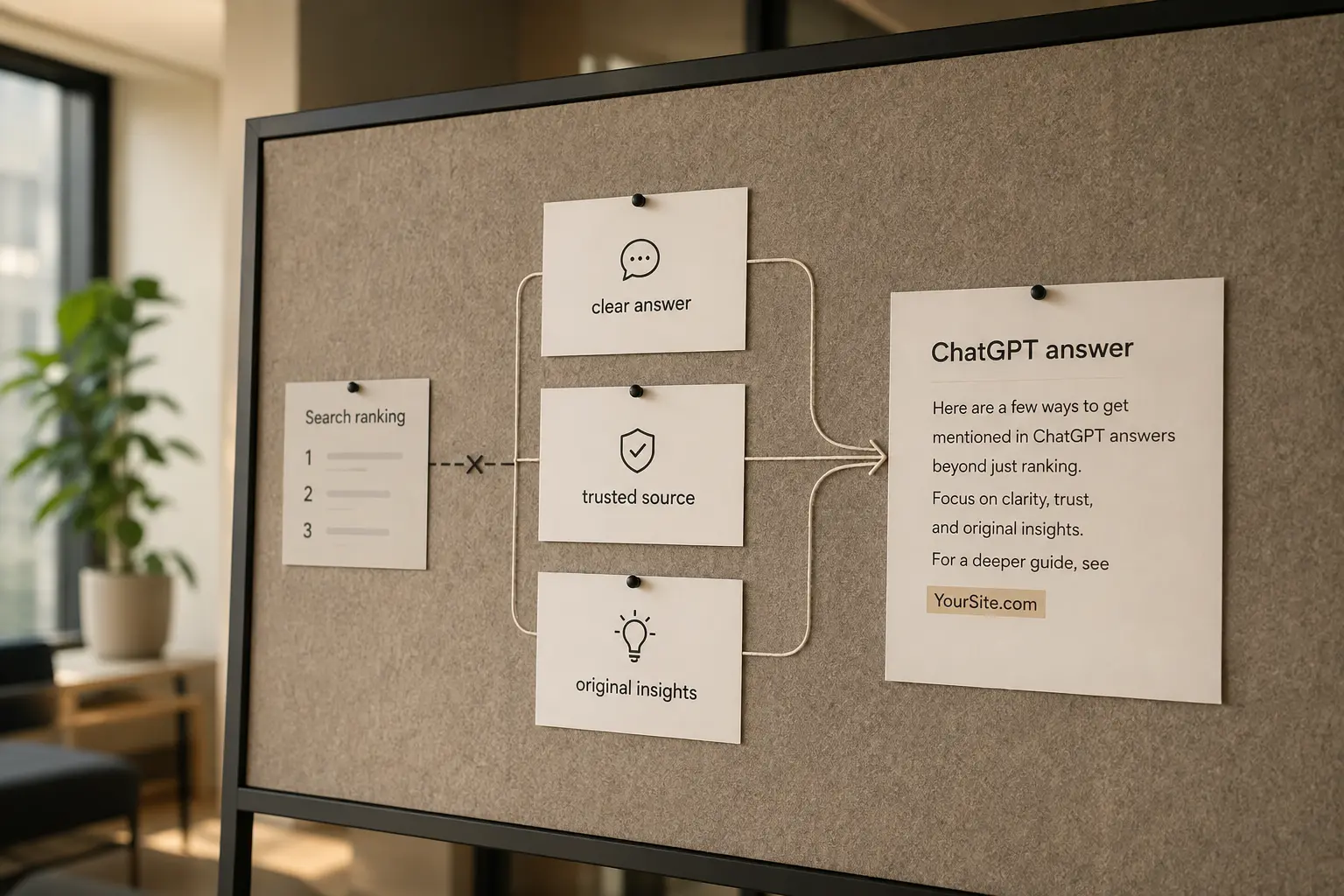
The biggest change is the shift from visibility through rankings to visibility through citations and recommendations. Traditional search asks which page ranks highest; AI-driven search increasingly asks which source provides the most trustworthy, complete answer.
A page can rank well yet be absent from AI summaries if it lacks depth, clarity, expertise, conversational relevance or trust signals.
SEO is not disappearing, it is evolving into something broader that supports search visibility, AI discoverability, entity authority and answer-engine optimisation together, as we unpack in AEO versus GEO and why AI rejects keyword stuffing.
Generative engine optimisation as the new strategy
To succeed, businesses must adopt generative engine optimisation, which prioritises creating content AI language models can understand, interpret and trust.
GEO rests on three pillars: intent, understanding the why behind a query; context, providing comprehensive, nuanced information; and natural language, structuring content in a clear, conversational way.
The objective is to position your content as the most authoritative, helpful answer for a topic, which means moving away from churning out generic, AI-generated articles, since search algorithms increasingly downrank low-quality, unoriginal content.
If you are new to the discipline, our explainer on what GEO is covers the fundamentals, and a generative AI visibility audit shows where you stand.
Why E-E-A-T matters more in the age of AI
As AI-generated search becomes common, trust signals matter more, because AI systems are designed to reduce misinformation and surface sources they consider reliable, authoritative and accurate.
This is why Google's experience, expertise, authoritativeness and trustworthiness framework has become so influential, since engines evaluate credibility, consistency, expertise, brand reputation and source reliability, not just keywords, as we detail in E-E-A-T for AEO.
Building AI-ready authority now involves more than publishing blogs regularly.
It means demonstrating genuine first-hand experience through case studies, original photos and unique data; showcasing expertise with first-party research and expert insight; building authoritativeness through citations and mentions from reputable sources; and earning trust through transparency, secure infrastructure and responsible AI practices.
Brands that contribute meaningful knowledge rather than repackaging existing information are far more likely to appear across AI answers, and those that establish strong authority today will hold visibility for years.
Your path forward in the AI era
The rise of generative AI is not a threat to Australian digital marketing; it is an opportunity to build deeper connections with customers.
The future of search belongs to brands that aspire to be the most valuable result, not just the most relevant, which means addressing customer needs across the entire journey with high-quality, expert-led content that demonstrates real experience.
Start by auditing your content through the lens of E-E-A-T and finding opportunities to provide unique, first-hand value across AI search, ChatGPT and Gemini.
Connect it to outcomes with our guide to measuring AEO ROI, and a free AI visibility audit or our GEO services is the fastest way to begin.


.svg)
.svg)
.svg)
.svg)
.svg)




.svg)

.svg)


.svg)
.svg)
.svg)
.svg)
.svg)