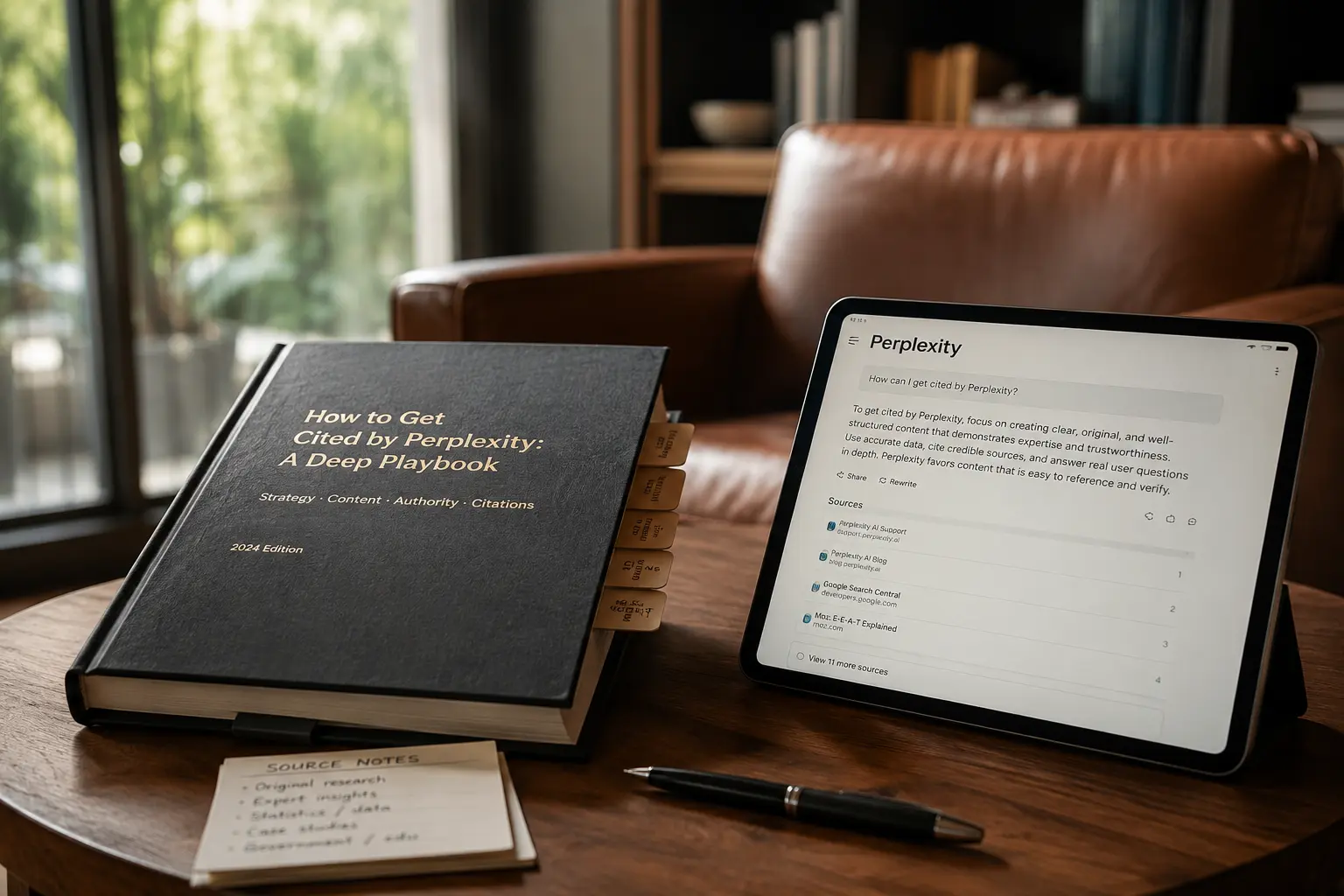
Search has changed, not died
Every few years someone declares SEO dead, and AI has revived the panic. But search is a human behaviour, not a platform. Whether someone types into Google or prompts a chatbot, they are still asking questions that need expert, trustworthy answers.
Search is not dying, it is fracturing across new interfaces: AI Overviews, conversational assistants and social platforms.
What has genuinely changed is the goal. For nearly three decades the aim was one of ten blue links. Now you are navigating AI-generated summaries and contextual answers, and the objective is to be the definitive source the AI chooses to cite.
That blends human adaptability with machine precision, and it rewards clarity, authority and value above old tactics. This is the foundation of AI SEO.
Understanding AI-driven search
AI is changing how people discover brands and products. Conversational engines like Gemini, Perplexity and Microsoft Copilot, alongside ChatGPT, are becoming go-to sources, synthesising information from many sources into a single direct answer rather than a list of links.
At the same time, Google has embedded AI directly into results through AI Overviews, summarised answers at the top of the page pulled from multiple sites.
How prevalent are they? A large-scale Semrush analysis of more than ten million keywords found AI Overviews appearing in a significant and growing share of US searches through 2025, expanding from informational queries into commercial and even navigational intent.
The practical takeaway from the Semrush AI Overviews study is blunt: your content now needs to be structured for AI interpretation, not just for crawlers, because for a growing number of searches the answer is delivered on the results page itself. Understanding how ChatGPT selects sources is now core knowledge.
The traffic reality: zero-click and falling click-through
This shift has a hard edge for traffic. As users get answers directly in an AI Overview, click-through rates for even top-ranked links have fallen. The widely cited Ahrefs study of 300,000 keywords found the presence of an AI Overview correlated with a substantial drop in click-through for the number one position, a gap that several research teams report has widened over 2025.
The broader behaviour change is just as significant. Research from Bain & Company found that around 60% of searches now end without the user clicking through to another site, and that a large majority of consumers rely on AI-generated summaries for a meaningful share of their searches, with organic traffic estimated to fall noticeably as a result.
High-profile publishers have linked sharp traffic declines directly to AI Overviews. The age of optimising purely for ten blue links is over, and measurement has to evolve with it, as our guide to measuring AEO ROI explains.
Traditional SEO vs AI SEO: what stays and what changes
The rise of AI does not erase good SEO, it rebalances it. What stays the same is non-negotiable: valuable, unique content, strong technical SEO with clean architecture, proper heading hierarchy, and off-page authority through credible mentions and links.
These fundamentals matter more than ever, and studies of AI Overviews consistently show a strong overlap between content that ranks organically and content that gets cited in AI answers.
What changes is the strategy on top. The focus shifts from keywords to conversations and intent, structuring content to answer the real questions people ask. The battleground moves from page-one rankings to inclusion in AI Overviews and chatbot responses, which rewards genuine topical authority.
And results become more dynamic, since two similar prompts can yield different AI answers, which makes a consistently referenced, authoritative brand more valuable than any single ranking. Keyword stuffing is firmly obsolete, a point we expand in why AI rejects keyword stuffing.
GEO and AEO: the new disciplines
Two related practices define AI-era optimisation. Generative engine optimisation tailors your content so generative models select and cite it, focusing on structured data, credible mentions and demonstrated expertise.
Answer engine optimisation structures content to answer the direct questions users ask AI, with clear question-led headings and concise answers. The two overlap and reinforce each other, as our breakdown of AEO versus GEO sets out.
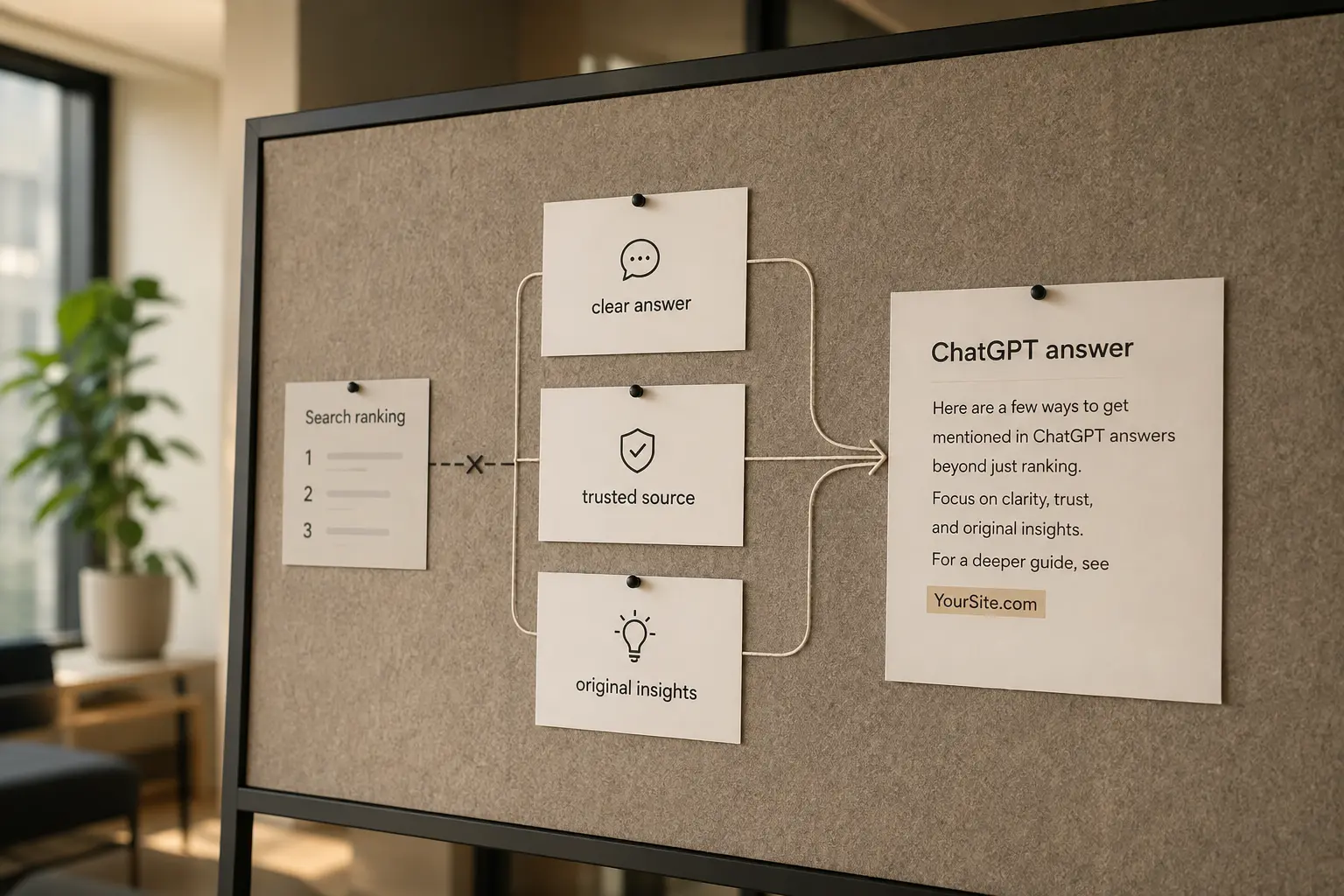
Neither replaces SEO. They share its foundations, high-quality content, E-E-A-T and relevance, but shift the measure of success from ranking and clicks to how often AI cites you. Because AI answers often resolve queries without a click, being the cited source is the new front-page position.
How to optimise for AI
Optimising for AI interpretation builds on best practice with new emphasis. Start with valuable, unique content: generic material gets lost, so lead with your proprietary data, original research, in-depth case studies and expert analysis that nobody else can offer. That uniqueness is what makes you a go-to source for models.
Reinforce technical SEO as the foundation, with fast load times, mobile-friendliness, clean site architecture and structured data that labels authors, products, reviews and FAQs so AI can extract specifics confidently.
Then structure content for extraction: clear H1, H2 and H3 hierarchy, an answer-first approach that puts the direct answer up top, short paragraphs, lists and key-takeaway summaries that AI can lift cleanly. Robust FAQ sections and content clusters that cover a topic from multiple angles signal the depth AI favours, while writing that genuinely engages both humans and machines is covered in our guide to content LLMs cite.
E-E-A-T is the deciding factor
Experience, expertise, authoritativeness and trust are how AI judges which sources to cite, and they have never mattered more. Show experience through client success stories, anonymised case studies and behind-the-scenes detail, including expert video.
Show expertise with detailed author bios, credentials and fact-checked, professionally reviewed content. Build authoritativeness through high-quality mentions, features and citations from reputable publications and associations.
And earn trust with transparency, authentic reviews, clear sourcing and easy-to-find contact and policy information.
This applies to both traditional and AI search, and accuracy is now a ranking signal in itself, since engines increasingly favour verifiable, current information over content with errors.
Our guide to E-E-A-T for AEO shows how to make these signals visible, reinforced by consistent entity optimisation.
The hybrid model: AI plus human
Here is a hard lesson many brands learned: purely AI-generated content is a dead end. Engines and LLMs are increasingly good at detecting thin, machine-written text that lacks depth, originality and genuine insight, and human-written content consistently outperforms it.
Yet human-only production struggles to match the speed and scale modern marketing demands.
The answer is a hybrid workflow. Let AI handle the foundation, keyword research, competitor analysis, content briefs and first drafts, then have humans add the value, refining tone, injecting original insight, verifying every fact, and ensuring brand voice.
A human-in-the-loop review for accuracy and bias is essential, because AI can confidently state incorrect or outdated information. This pairing delivers the scale of AI with the authenticity and judgement only people provide, and it keeps your content on the right side of quality standards.
How AI assists your SEO workflow
AI is not only changing the rules, it is also a powerful tool for playing the game. It powers keyword research that goes beyond matching to analyse intent, predict trends and surface the conversational queries your audience uses. It assists content production by generating ideas, outlines and drafts, freeing strategists to add unique insight.
And it supports on-page optimisation by analysing readability, metadata and semantic relevance against intent. Treated as an amplifier rather than a replacement, AI makes your SEO faster, more targeted and more effective, as long as human oversight stays in control of strategy and accuracy.
Measuring success in the AI era
Traditional metrics like raw click-through are becoming less reliable as zero-click rises, yet many marketers still are not tracking their AI visibility at all. Adapt your KPIs. Monitor brand mentions and citations within AI Overviews and chatbot responses, track engagement from AI-driven referral sources, and measure how often your content is used as a source in AI answers.
Importantly, weigh value over volume: visitors who do click through from an AI answer are often further along the buyer journey and convert better, so qualified leads and conversions can rise even as sessions fall. A regular generative AI visibility audit keeps this honest, and our AI Overviews guide covers how to earn inclusion.
The future of search
The evolution is far from over. Bain's research suggests a large share of LLM users already turn to these platforms for tasks once reserved for search, from research to shopping recommendations, signalling a future where visibility depends on authority in the eyes of an AI rather than rank in a list.
Expect deeper integration of voice search, visual search, predictive results and AI agents that act on a user's behalf. For local brands, that means structuring content around location intent and complete business profiles, as our Australian listings guide explains.
The immediate priority is simple: build a brand AI can trust. The businesses that align their content with AI interpretation now will own the search landscape of tomorrow, in both the traditional links and the new world of AI answers.
Treat this as core to your AI search visibility, and a free AI visibility audit is the fastest way to see where you stand and what to fix first.


.svg)
.svg)
.svg)
.svg)
.svg)




.svg)

.svg)


.svg)
.svg)
.svg)
.svg)
.svg)