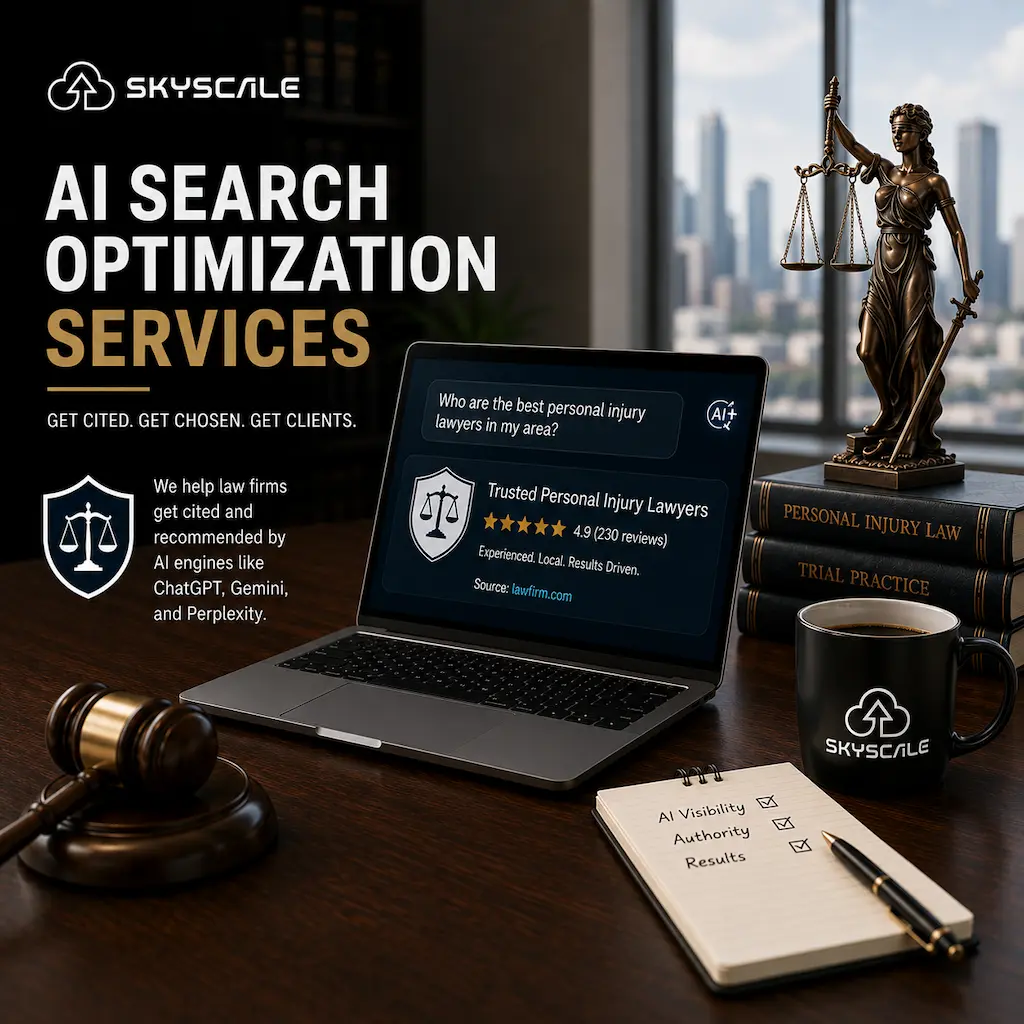


The search landscape has shifted beneath our feet. Your content might rank well, but if it's not appearing in AI-generated answers, you're already invisible to a growing segment of your audience.
Consider this: when someone asks ChatGPT, Perplexity, or Google's AI Mode for recommendations, they receive instant, compiled answers drawn from multiple sources. If your brand isn't among those cited sources, you've lost the opportunity to influence that decision. Answer Engine Optimization (AEO) is how you change that.
Understanding Answer Engine Optimization (AEO)
Answer Engine Optimization is the practice of structuring your content so AI-powered search engines recognise it as a credible, authoritative source worth citing. Unlike traditional SEO, which focuses on ranking positions and click-through rates, AEO prioritises being quoted, referenced, and recommended within AI-generated responses.
When users query AI assistants, these platforms compile information from sources they deem trustworthy and relevant. Your goal is to become one of those sources. This requires a fundamentally different approach to content creation, one that prioritises clarity, structure, and demonstrable expertise over keyword density and backlink volume.
The mechanics are straightforward: AI engines analyse vast datasets, identify patterns of consensus across high-authority sources, and extract information that directly answers user queries. The better your content aligns with how these systems parse and evaluate information, the more likely you are to be featured.
Increase your visibility in AI-driven search with Answer Engine Optimization. We’ll help your business rank in Google SGE, ChatGPT, and Bing Copilot, driving more traffic, trust, and conversions while strengthening your online presence.
.png)
Strategy 1: Optimize for E-E-A-T
Experience, Expertise, Authoritativeness, and Trustworthiness (E-E-A-T) have become three times more critical in the AI era. These aren't just ranking signals for Google, they're the foundation AI platforms use to determine which sources deserve citation.
Demonstrate real expertise. Include author credentials, relevant qualifications, and practical experience in your field. AI engines prioritise content from verifiable subject matter experts over anonymous contributors.
Build authoritative consensus. When multiple credible sources reinforce the same information, AI platforms treat it as reliable. Create interconnected content across your site that consistently reinforces your core messages and key data points.
Establish trust signals. Include citations to peer-reviewed research, link to authoritative external sources, and maintain factual accuracy throughout your content. AI systems check claims against multiple sources, inconsistencies damage your credibility.
Showcase first-hand experience. Original research, case studies, and real-world examples carry significant weight. AI engines can distinguish between content that regurgitates existing information and content that adds genuine insight.
The payoff is substantial. Brands that prioritise E-E-A-T signals report conversion rates from AI-driven traffic at 27%, significantly higher than traditional search channels.
Strategy 2: Target Voice Searches
Voice search isn't emerging, it's established. Over 40% of Australian adults now use voice assistants regularly, and that figure continues climbing. Voice queries differ fundamentally from typed searches: they're longer, more conversational, and expect immediate, precise answers.
Write for natural language. People speak differently than they type. Voice queries typically take the form of complete questions: "What's the best ergonomic office chair for remote workers?" rather than "best ergonomic chair." Structure your content to mirror these conversational patterns.
Provide direct answers immediately. Voice assistants read aloud the most relevant response they find. Place your answer in the first 40–60 words under each heading, then expand with supporting detail. This "answer first, explain later" approach serves both voice search and AI compilation.
Use question-based headings. Frame your H2 and H3 tags as questions your audience actually asks. This creates a direct match between user queries and your content structure, making it easier for AI engines to identify relevant sections.
Implement Speakable Schema. This structured data markup tells voice assistants which parts of your content are optimised for audio delivery. It's a technical signal that improves your chances of being selected for voice responses.
Voice search queries often indicate high purchase intent. When someone asks their assistant for product recommendations, they're typically close to making a decision. Being the answer they hear can directly impact your bottom line.
Strategy 3: Create Direct Answers
AI engines exist to eliminate friction. They compile information so users don't need to visit multiple sites or wade through lengthy articles. Your content should facilitate this, not fight it.
Lead with clarity. Begin each section with a one or two-sentence summary that directly addresses the topic. No lengthy introductions or context-setting, answer the question immediately, then provide elaboration.
Structure information hierarchically. Use the "fan-out" technique: provide a concise answer first, then expand into progressively more detailed explanations. This allows AI engines to extract the level of detail most appropriate for each query.
Format for scannability. Break complex information into bulleted lists, numbered steps, or comparison tables. AI platforms quoted content featuring lists 78% of the time in recent studies, they're simply easier to parse and present.
Write in subject-first sentences. Use active voice and clear, declarative statements. "You can optimise for AEO by..." is more easily extracted than passive constructions or complex clauses.
The principle is simple: if a human can quickly scan your content and extract the answer, an AI engine can do it even more efficiently. Remove every barrier between the question and your response.
Strategy 4: Be Visible on Multiple Platforms
AI-powered discovery extends far beyond ChatGPT and Google's AI Mode. Your audience searches on Reddit, TikTok, LinkedIn, YouTube, and Quora, each platform with its own discovery algorithms and content preferences.
Identify where your audience actually searches. Check your analytics to see which platforms drive meaningful traffic. Don't assume, verify where your specific audience begins their research journey.
Adapt content for each platform. A 2,000-word blog post, a 60-second TikTok video, a LinkedIn carousel, and a Quora answer can all address the same core topic, but each requires a different approach. Repurpose strategically rather than copying and pasting.
Build presence in forums. Google now features Reddit and Quora responses directly in search results. Contributing valuable answers on these platforms doesn't just help users, it creates additional pathways for your brand to appear in both traditional and AI-powered search results.
Create interconnected content ecosystems. AI engines look for patterns of consensus. When your insights appear across multiple credible platforms, you reinforce your authority on the topic.
The fragmentation of search means you can't rely on a single channel for visibility. Diversification isn't just risk management, it's a requirement for comprehensive discoverability in the AI era.
Strategy 5: Leverage Structured Data and Schemas
Structured data functions as a translation layer between your content and AI systems. It explicitly signals what your content covers, how different elements relate to each other, and which information AI engines should prioritise.
Implement JSON-LD schema markup. This format is easiest to maintain and Google's recommended approach. Use Schema.org vocabulary to identify articles, products, FAQs, how-to guides, and other content types.
Ensure consistency between markup and visible content. The information in your structured data must precisely match what users see on your page. Discrepancies signal unreliability to both traditional crawlers and AI engines.
Use FAQ schema for common questions. If your content includes Q&A sections, marking them up with FAQ schema creates direct pathways for AI engines to extract and cite your answers.
Add breadcrumb and article schemas. These help AI systems understand your site structure and the relationship between different content pieces, improving their ability to provide contextually relevant information.
Structured data won't guarantee AI citation, but its absence creates unnecessary friction. You're essentially asking AI engines to interpret your content without any guidance, a disadvantage you can easily avoid.
Embracing AEO for Future Success
The transition to AI-powered search isn't a distant possibility, it's the current reality reshaping how audiences discover information. Brands that establish authority in AI-generated answers today will maintain that advantage as adoption accelerates.
AEO complements rather than replaces your existing SEO efforts. The fundamentals still matter: quality content, authoritative backlinks, technical excellence, and genuine expertise. What changes is how you structure and present that expertise to accommodate AI parsing and citation.
Start with your highest-value content. Identify the topics where you genuinely lead your industry, then optimise those pieces using the strategies outlined above. Monitor which approaches generate citations and mentions in AI responses, then scale what works.
The competitive window is open but narrowing. As more organisations recognise the importance of AEO, the difficulty of establishing authority will increase. The brands that move decisively now, that restructure their content strategy around AI discoverability, will shape the conversations AI engines have about their industries.
Your expertise deserves to be discovered. AEO ensures it will be.
Key Features
- AEO turns intent-driven queries into AI visibility.
- E-E-A-T builds authority for AI-driven credibility.
- Voice search optimization boosts conversational discoverability.
- Structured data ensures AI parses content accurately.
- Multi-platform presence strengthens brand authority signals.
Frequently Asked Questions?

AEO focuses on enhancing the visibility and authority of your brand or content in AI-driven search engines by ensuring it is easily discoverable, credible, and relevant.
Start by auditing your content for relevance, accuracy, and expertise. Establishing structured data, gaining citations, and producing high-quality, industry-focused content are vital actions.
Absolutely! AEO can level the playing field by helping small businesses establish authority through strategic content creation and precise optimization, even in highly competitive industries.
AI engines rely heavily on trusted data. Gaining credible citations and mentions in reputable sources enhances your brand’s authority, making it more likely to be referenced in AI responses.
AEO is an ongoing process. As AI evolves and new trends emerge, continuous updates, monitoring, and strategic adjustments are essential to maintaining authority and relevance.