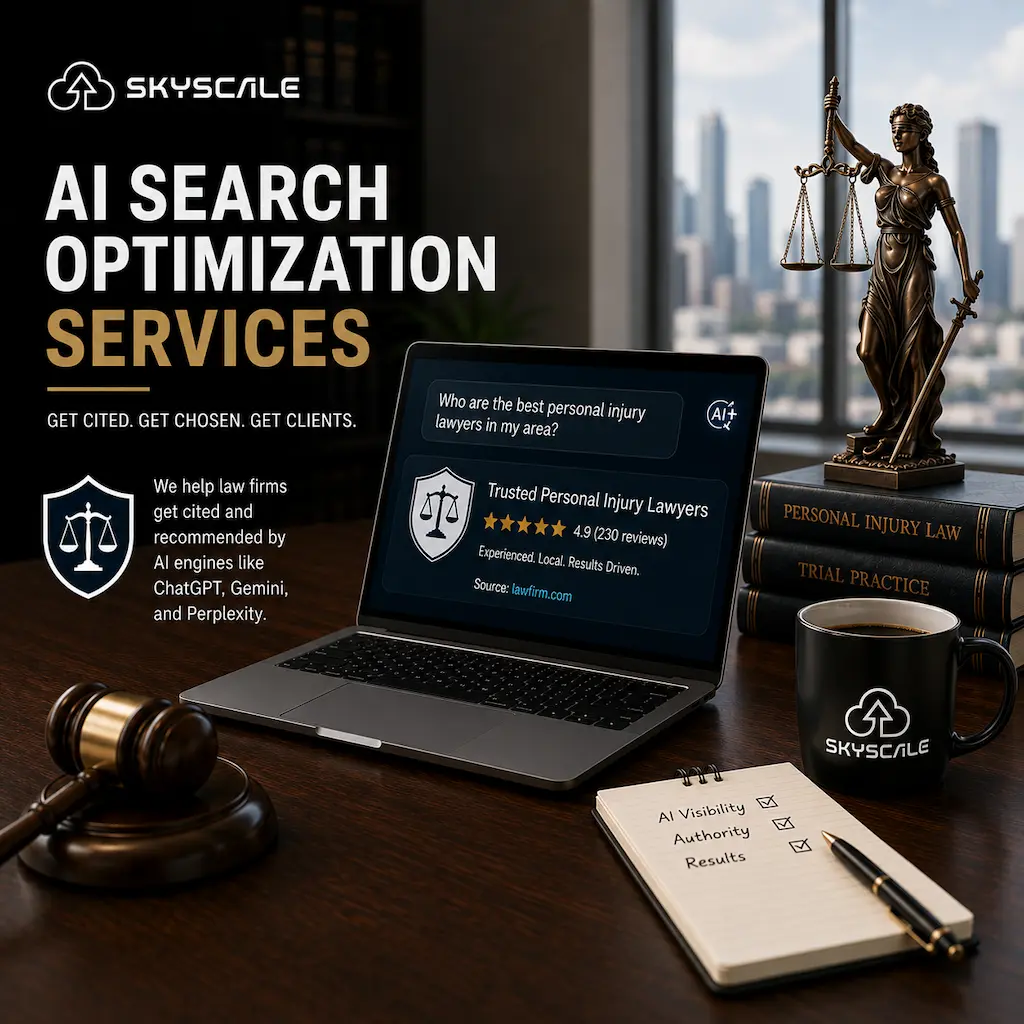


Search has fundamentally changed. Google's AI Overviews now appear for millions of queries, while ChatGPT, Gemini, and other AI engines are reshaping how people find information. The question isn't whether AI will impact your search visibility, it's whether you're ready to optimise for it.
Traditional SEO still matters, but it's no longer enough. Success in AI-driven search requires understanding how machines interpret, process, and present your content. This guide reveals exactly how to position your brand for maximum visibility across both traditional search results and AI-powered platforms.
Understanding AI-Driven Search
AI-driven search represents a fundamental shift from keyword matching to contextual understanding. Google's AI Overviews use advanced language models to analyse multiple sources and generate comprehensive answers directly in search results. Rather than simply ranking pages by authority and relevance, these systems evaluate content based on how well it addresses user intent.
The key difference lies in presentation. Traditional search provides a list of links; AI-driven search delivers synthesised answers with supporting sources. According to recent research, 92.36% of AI Overviews link to at least one domain ranking in the organic top 10, but they also pull information from newer, more comprehensive sources that better match the query's conversational nature.
Traditional SEO Still Matters
While AI transforms search presentation, fundamental SEO principles remain crucial. Your content needs to rank well organically to have the best chance of appearing in AI-powered results.
Research shows that 63.19% of AI Overview citations come from pages ranking in the organic top 10. This means your technical SEO, on-page optimisation, and link-building efforts directly impact your AI search visibility. Pages with strong domain authority, proper technical implementation, and comprehensive topical coverage consistently outperform in both traditional and AI-driven search formats.
Crafting Comprehensive Content
AI systems favour content that provides complete, nuanced answers to user queries. This requires moving beyond surface-level coverage to create genuinely comprehensive resources.
Structuring Content Properly
Proper content structure is essential for AI interpretation. Break information into digestible sections using clear headings, bullet points, and short paragraphs. AI systems scan for logical flow and easily extractable information.
Place direct answers to primary questions early in your content, ideally within the first few paragraphs. This approach helps AI systems immediately identify key information for potential inclusion in overviews. Include summary sections or key takeaways that can be easily extracted and cited.
Use formatting strategically: implement H2 and H3 tags to create clear content hierarchy, incorporate lists for step-by-step processes, and bold important concepts. This structured approach makes your content more scannable for both human readers and AI systems.
Creating Content Clusters
Develop interconnected groups of content around core topics. If you're targeting "email marketing strategies," create supporting articles about email automation, list building, and performance metrics. This cluster approach positions your website as a comprehensive resource, increasing the likelihood that AI systems will recognise your topical authority.
Content clusters work because AI systems evaluate not just individual pages but entire websites for expertise and comprehensiveness. When you thoroughly cover a topic from multiple angles, you demonstrate the depth of knowledge that AI systems favour when selecting sources for overviews.
Answering in Detail
AI-driven search rewards content that addresses queries thoroughly. Present multiple perspectives on complex topics, include supporting data and expert insights, and anticipate follow-up questions users might have.
Consider the conversational nature of AI interactions. Users often ask follow-up questions, so structure your content to naturally flow from basic concepts to more advanced applications. This approach increases the chances that your content will be selected for various related queries.
AI search is rewriting the rules of visibility. Position your brand to be cited, trusted, and recommended across answer engines and AI results.
.png)
Prioritising E-E-A-T and Online Reputation
Experience, Expertise, Authoritativeness, and Trustworthiness remain critical factors in AI-driven search. These principles guide how AI systems evaluate source credibility.
Fact-Checking
Accuracy is non-negotiable. AI systems increasingly identify and favour factually correct information over content with errors or outdated data. Regularly review and update your content with current statistics, verified claims, and properly attributed information.
Consider implementing fact-checking processes: cite original sources, link to authoritative research, and clearly distinguish between established facts and opinions or predictions. This approach builds trust with both AI systems and human readers.
Demonstrating Expertise
Clearly establish author credentials and expertise. Include detailed author bios, highlight relevant qualifications, and showcase industry experience. AI systems evaluate not just content quality but the credibility of those creating it.
Move away from generic "company team" attributions toward real author names with verifiable expertise. This personalisation helps AI systems assess the human authority behind your content.
Showcasing Brand Expertise
Build your brand's reputation through thought leadership, industry participation, and consistent high-quality content creation. Pursue guest posting opportunities, participate in industry discussions, and seek mentions from reputable sources.
Your broader online presence influences how AI systems perceive your content's authority. Active engagement across multiple platforms and consistent demonstration of expertise strengthens your overall digital reputation.
Optimising for SERP Features
AI Overviews frequently appear alongside other search features. Research shows that 99.25% of AI Overviews appear with at least one additional SERP feature, most commonly People Also Ask sections.
Featured Snippets
Content optimised for featured snippets often performs well in AI Overviews. Structure your content to provide concise, direct answers to common questions. Use clear headings formatted as questions followed by comprehensive but scannable answers.
Format information appropriately: use tables for data comparisons, numbered lists for step-by-step processes, and bullet points for key features or benefits. This structured approach increases your chances of appearing in both featured snippets and AI Overviews.
People Also Ask
The People Also Ask feature reveals related questions users frequently search. Use these insights to expand your content coverage and anticipate the comprehensive information AI systems favour.
Structure sections of your content to directly address these related questions. This approach demonstrates thoroughness and increases the likelihood that your content will be selected for various query variations.
Building Your AI-First Content Strategy
Success in AI-driven search requires systematic approach combining traditional SEO excellence with AI-specific optimisations. Start by auditing your current content for AI-readiness: does it provide direct answers, maintain proper structure, and demonstrate clear expertise?
Focus on creating content that serves both human readers and AI systems. This means writing naturally while incorporating the structural elements that make information easily extractable. The goal isn't to game AI algorithms but to create genuinely helpful content that AI systems recognise as valuable.
Monitor your performance across both traditional search results and AI-powered platforms. Track which content appears in AI Overviews and analyse the patterns that lead to inclusion. This data-driven approach helps refine your strategy over time.
The future belongs to brands that master both human communication and AI interpretation. By combining comprehensive content creation with strategic optimisation, you position your brand for sustained visibility in the evolving search landscape.
Ready to dominate AI-driven search? The strategies outlined here provide your foundation, but implementation requires ongoing attention and refinement. Start with your highest-priority content, apply these principles systematically, and watch your visibility grow across all search formats.
Key Features
- Combine traditional SEO with AI-specific optimization techniques.
- Structure content for clarity, depth, and easy extraction.
- Build topical authority through interconnected content clusters.
- Emphasize E-E-A-T to strengthen trust and credibility.
- Optimize for featured snippets and People Also Ask.
Frequently Asked Questions?

Structured data provides search engines with context about your content, making it easier for them to understand and feature it in rich search results like snippets, carousels, or FAQs. This dramatically enhances your chances of being noticed.
Regular updates are crucial to stay relevant. Incorporate new trends, keywords, and alignment with evolving AI algorithms to maintain strong rankings. Aim for quarterly or bi-annual reviews at a minimum.
Yes, AI-driven search is pivotal for voice search optimization. By focusing on conversational queries, natural language processing, and featured snippets, you can position your content to answer voice search questions effectively.
Tools like SEMrush, Ahrefs, Google Search Console, and Schema markup generators are highly valuable. These tools help you research relevant keywords, implement structured data, and analyze performance for ongoing improvements.
Use key performance indicators (KPIs) like organic traffic growth, improved search rankings, higher conversion rates, and featured snippet appearances. Continuous monitoring and adapting your strategies ensure long-term success.