

AI search is rapidly transforming how we find information online. Search engines like Google are no longer simple directories matching keywords to web pages; they have evolved into complex "answer engines." This shift is powered by sophisticated AI that aims to understand the context and intent behind every query. However, this technological leap faces a unique and fascinating challenge down under: Australian slang.
The distinct, colourful, and ever-changing nature of Aussie slang presents a significant hurdle for AI systems built on global language models. From a friendly "g'day" to ordering a "flat white," local vernacular is deeply woven into the fabric of daily life in Australia. How well do these advanced AI search engines understand a query for "the best servo brekky near me"?
This post explores the intricate relationship between AI search engines and Australian slang. We will examine the technology that allows AI to process human language, the specific complexities of Aussie lingo, and how these AI systems are learning, or failing, to interpret local queries. Understanding this dynamic is crucial for businesses aiming to connect with an Australian audience and for anyone curious about the future of search.
AI and Natural Language Processing (NLP)
At the core of an AI search engine's ability to understand language is a field called Natural Language Processing (NLP). NLP is a branch of artificial intelligence that gives computers the ability to read, understand, and interpret human language. When you type a query into a search bar, NLP algorithms get to work, breaking down your sentence to figure out what you truly mean.
These systems are trained on massive datasets of text and speech from across the internet, allowing them to recognise patterns, relationships, and context. For example, instead of just matching the keyword "pizza," the AI can infer from your location and past searches that you're likely looking for a family-friendly restaurant that's open now.
However, AI's understanding is not perfect. It relies on pattern recognition rather than genuine comprehension, which creates limitations. Nuanced language, sarcasm, irony, and culturally specific idioms can be difficult for an algorithm to grasp. This is where the playful and context-rich nature of Australian slang becomes a true test for even the most advanced AI.
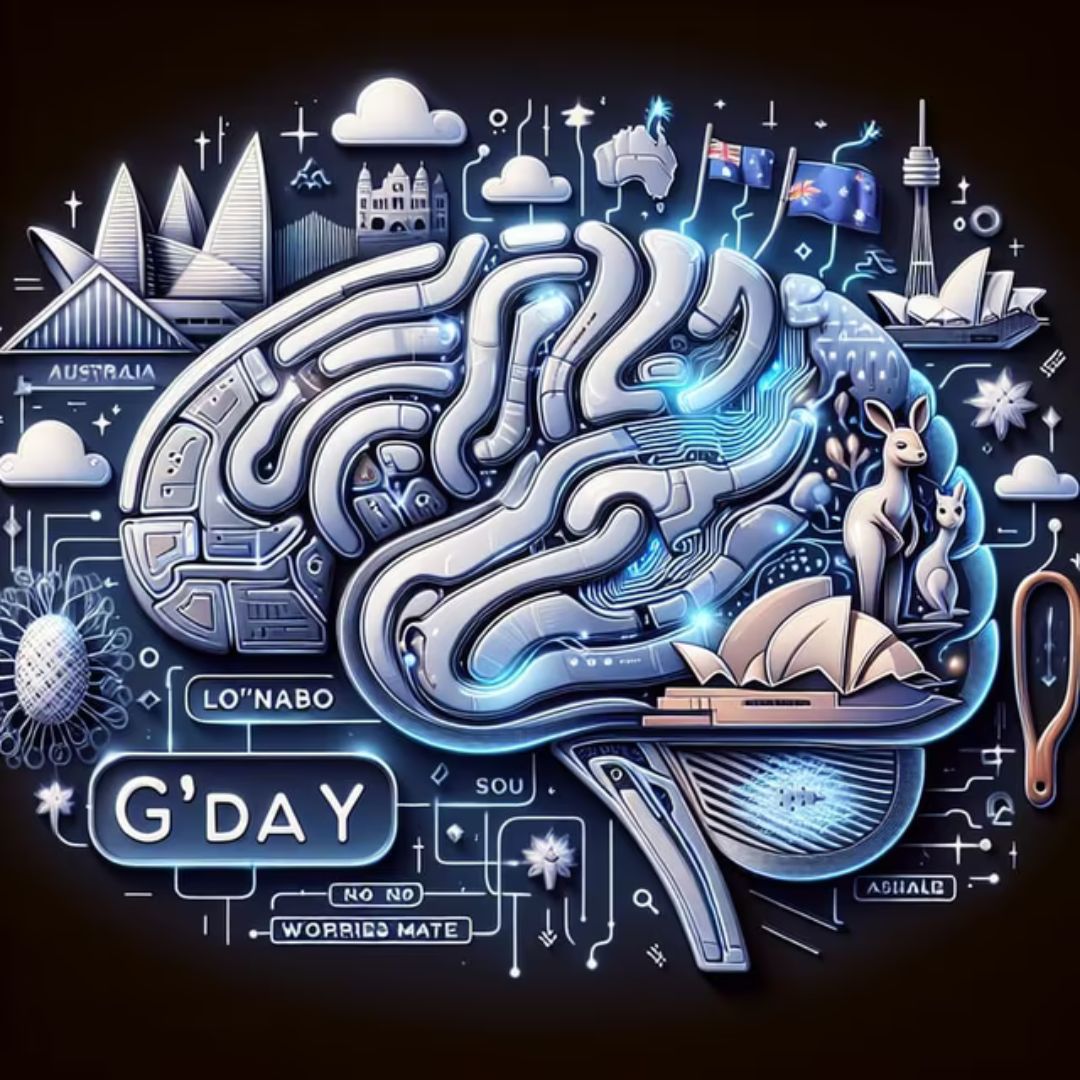
AI doesn’t always interpret Aussie slang correctly. Optimise your content so ChatGPT and Google AI clearly understand your local language, and search intent.
.png)
How AI Search Engines Interpret Australian Slang
So, how do search engines like Google handle a query like "fair dinkum good coffee in the CBD"? The process is a fascinating mix of advanced technology and occasional, sometimes humorous failures.
The Role of Machine Learning
AI algorithms use machine learning to improve their understanding over time. Every time a user in Australia searches for something using slang and then clicks on a relevant result, the AI learns a little more. For instance, if thousands of users search for "best bottle-o in Bondi" and end up on the websites of local liquor stores, the AI strengthens the association between "bottle-o" and "liquor store." This continuous feedback loop helps refine the algorithm's accuracy for local queries.
Real-World Examples
Modern AI search has become surprisingly adept at interpreting some common slang. A search for "smashed avo on toast" will reliably return a list of nearby cafes. This is because the term has become so widespread that it's now a well-established pattern in the AI's training data.
However, the system can still stumble. Over a year after Google introduced AI Overviews in Australia, which places AI-generated answers at the top of many search results, errors still occur. Google itself warns that its "AI Mode doesn't always get it right." A search for a less common or more regional slang term might yield irrelevant results or a completely confused AI-generated summary. The AI might misinterpret "Woop Woop" as a brand name or a typo rather than a concept for a remote place.
Impact on Local Search and SEO
The way AI interprets language has profound implications for local businesses and their Search Engine Optimisation (SEO) strategies. It's no longer enough to just stuff a website with keywords.
- Understanding Search Intent: AI now focuses on user intent. When someone searches for "best pub feed," the AI predicts they want a restaurant with classic pub meals, good reviews, and possibly a family-friendly atmosphere. Businesses need to create content that answers these underlying needs, not just matches the keywords.
- The Rise of Voice Search: With AI assistants like Siri and Google Assistant, people are searching more conversationally. A user might ask, "Where can I get a good flat white around here?" instead of typing "coffee near me." This trend requires businesses to optimise their online presence for natural, conversational language.
- Hyper-Localised Recommendations: AI can deliver hyper-localised results. By tracking a user's location and search behaviour, it can recommend a specific cafe just around the corner. For local businesses, this means ensuring their location information is accurate and their online presence is strong within their specific geographic area.
- AI-Driven Tools: To keep up, businesses can use AI-driven tools like Clearscope or MarketMuse. These platforms analyse top-ranking content and provide recommendations for optimising your own, helping you align with the conversational intent that AI search now prioritises.
Challenges and Future Directions
The journey for AI to master Australian slang is far from over. Language is constantly evolving, with new terms and phrases emerging all the time. Can AI keep up?
One of the biggest challenges is that AI learns from existing data. It can mimic and reproduce slang, but it cannot create it. True linguistic innovation comes from human creativity and shared cultural experiences, something AI inherently lacks. This raises a concern: as AI models become the primary source of answers, they may inadvertently stifle the very linguistic diversity they are trying to understand. If the AI doesn't need to crawl and index diverse content anymore, the richness of language on the web could diminish.
Furthermore, there are ethical considerations. As AI becomes more adept at understanding and using slang, its potential to influence social and political narratives grows. Ensuring AI literacy, understanding both its capabilities and its limitations, will be essential for navigating this new landscape responsibly.
The Future is Conversational
AI search engines have made incredible strides in understanding the complex and colourful world of Australian slang. Through advanced NLP and machine learning, they are slowly cracking the code of local queries, transforming from simple keyword matchers into intelligent answer engines.
However, the task is ongoing. The dynamic, evolving nature of language means AI will always be playing catch-up. For businesses, the message is clear: the future of search is conversational. Success in this new era depends on understanding your audience deeply and creating content that speaks to their needs in a natural, authentic way.
The relationship between AI and language is a two-way street. As we adapt our digital strategies to how AI "thinks," the AI is simultaneously learning from us. The next time you ask your phone for the "best snag sizzle nearby," You're not just getting an answer, you're teaching the machine a little more about what it means to be Australian.
Key Features
- AI struggles to interpret evolving Australian slang accurately.
- NLP enables AI to decode Aussie queries contextually.
- Machine learning refines understanding through user search behaviour.
- Conversational content boosts local SEO and engagement.
- Businesses must adapt to AI’s linguistic interpretation.
Frequently Asked Questions?

AI uses Natural Language Processing (NLP) to recognize patterns in language. It learns from data and adapts to terms like "brekky" or "servo," but still struggles with more regional or less common slang.
Machine learning helps AI improve its understanding over time by analyzing user behavior. Popular terms, like "smashed avo," become well-understood by the AI, but regional slang can still cause confusion.
AI prioritizes understanding search intent, meaning businesses must optimise content for conversational queries and local relevance. It’s crucial for local businesses to have accurate location data.
Yes, voice searches are becoming more conversational, and AI is adapting. However, Australian slang in voice queries may still cause occasional misinterpretation, especially for less common terms.
To optimise, businesses should use natural, conversational language on their websites. Additionally, ensuring local relevance and using AI-driven tools to analyse search intent can help improve visibility in AI-driven search results.