Large Language Models are reshaping how people find information. Instead of clicking through ten blue links, users now ask ChatGPT, Gemini, or Copilot a question and receive a synthesized answer, often citing specific sources.
For content creators and marketers, this shift presents a new challenge: how do you ensure your content gets picked up and cited by these AI systems?
The answer lies in understanding what LLMs look for when they generate responses. They prioritize authoritative, well-structured content that directly addresses user intent. Getting cited isn't about gaming an algorithm, it's about creating content that AI can trust, parse, and confidently reference.
This guide breaks down practical strategies to optimize your content for LLM citations, from crafting authoritative pieces to structuring data in ways AI can understand.
Understanding LLM Citations
When an LLM generates a response, it draws from a vast pool of information it was trained on or retrieves in real time. A citation occurs when the AI references your content as a source in its answer.
Unlike traditional SEO, where the goal is to rank high and earn clicks, LLM optimization focuses on becoming the answer AI chooses to surface. This means your content needs to be clear, credible, and semantically aligned with what users are asking.
Why do LLM citations matter?
First, they build brand visibility. Even if users don't click through to your site, seeing your brand mentioned alongside industry leaders signals authority and trust.
Second, they future-proof your strategy. AI-powered search is growing rapidly, some experts predict it will surpass traditional search by 2027. Brands that optimize for LLM citations now will maintain relevance as search behavior evolves.
Crafting Content for LLM Citations
Build Trust Through Authoritative Content
LLMs prioritize content they can trust. To signal authority, your content should demonstrate expertise, provide evidence for claims, and link to reputable sources.
Include author bios that highlight credentials and relevant experience. If you're publishing a guide on marketing strategy, note that the author has 10 years of experience in the field. If you're writing a product review, explain your testing methodology and how many products you evaluated.
Back up statements with data. If you claim that "email marketing drives higher ROI than social media," cite a credible study. LLMs favor content that references industry stats and authoritative sources.
Update your content regularly. Add "last updated" dates to signal freshness, and refresh pages every six months to ensure information remains accurate.
Match User Intent with Semantic Relevance
Semantic relevance measures how closely your content aligns with the meaning behind a user's query, not just the keywords they use.
LLMs understand context. If someone asks, "What's the best project management tool for remote teams?" the AI looks for content that discusses collaboration features, remote work challenges, and team size considerations, not just pages that repeat the phrase "project management tool."
To improve semantic relevance, cover related concepts naturally. Use synonyms, answer related questions, and explore subtopics within your content. For example, a guide on email marketing might also touch on automation, segmentation, and A/B testing.
Structure your content to match conversational queries. Frame subheadings as questions users might ask, like "How do I improve email open rates?" or "What's the difference between automation and segmentation?"
Write in Simple, Clear Language
LLMs favor content that's easy to parse. Use straightforward sentences, conversational language, and logical flow.
Avoid jargon unless it's necessary, and if you do use technical terms, define them. Break up long paragraphs into shorter sections, and use headings and subheadings to create a clear hierarchy.
Aim for a Flesch reading-ease score of 60 or higher. This ensures your content is accessible to a broad audience, and easy for AI to understand.
Use Summaries
LLMs often look for concise takeaways that match user intent. Starting your content with a short bulleted list of key points makes it easier for AI to extract and cite your answer.
For example, if you're writing a guide on remote work productivity, begin with a summary like:
Content Formats That LLMs Love
Certain content types are particularly well-suited for LLM citations. Here's what works:
Knowledge Graphs and Structured Data
LLMs rely on structured data to verify facts and link entities like people, brands, places, and concepts. Use schema markup to define key information on your pages, such as product details, author credentials, or FAQs.
FAQs and Listicles
FAQs provide direct, conversational answers to common questions, exactly what LLMs are designed to surface. Use natural language that mirrors how people actually ask questions, and start each answer with a concise response.
Reviews and Comparisons
Product reviews and comparison posts offer balanced insights that help users make decisions. To optimize these for LLM citations, include comparison tables, outline use cases, and provide a clear verdict.
Increase your visibility in AI-driven search with Answer Engine Optimization. We’ll help your business rank in Google SGE, ChatGPT, and Bing Copilot, driving more traffic, trust, and conversions while strengthening your online presence.
.png)
Optimizing for Knowledge Graphs
Knowledge graphs connect entities and concepts in a way that AI can interpret. To optimize for them, use schema markup and structured data.
Schema markup is code you add to your website to help search engines and LLMs understand your content. For example, you can use schema to define a person, product, event, or FAQ.
Structured data might include tables, bullet points, or labeled sections that make it easy for AI to extract information. When your content is well-organized and clearly labeled, LLMs can parse it more effectively.
Where to Seed Content for LLM Pickup
LLM seeding involves publishing content in formats and places where LLMs are most likely to scrape, summarize, and cite it.
Authoritative Sites
Publish guest posts or contribute expert quotes to trusted industry publications. Getting featured in well-established media outlets signals credibility to both humans and AI.
Share content on third-party platforms like Medium, Substack, and LinkedIn articles. These sites have strong domain authority, which increases the likelihood that LLMs will reference them.
Well-Established Domains
Your own site matters too. Focus on building a strong backlink profile, maintaining a clean site structure, and ensuring your pages are crawlable.
Participate in user-generated content hubs like Reddit, Quora, and niche forums. Share helpful answers, provide bug fixes, and engage in community discussions. LLMs often pull from these platforms when generating responses.
Maintaining and Updating Content
LLMs prioritize current, accurate information. To stay relevant, refresh your content regularly.
Update stats, replace outdated examples, and add new insights based on recent trends. Include "last updated" dates to signal freshness.
Revisit high-performing pages every six months. Check for broken links, update references, and ensure the content still aligns with user intent.
Building Topical Authority
LLMs favor brands that demonstrate deep expertise in a specific area. To build topical authority, create content clusters around core topics.
A content cluster consists of a pillar page (a comprehensive guide on a broad topic) and supporting articles (detailed posts on related subtopics). For example, a pillar page on "Email Marketing" might link to articles on automation, segmentation, and A/B testing.
Use related keywords, FAQs, and structured data to maintain semantic consistency across your cluster. Link your content internally to reinforce relationships between pages.
Ensuring Site Crawlability
If search engines can't crawl your site, LLMs can't find your content.
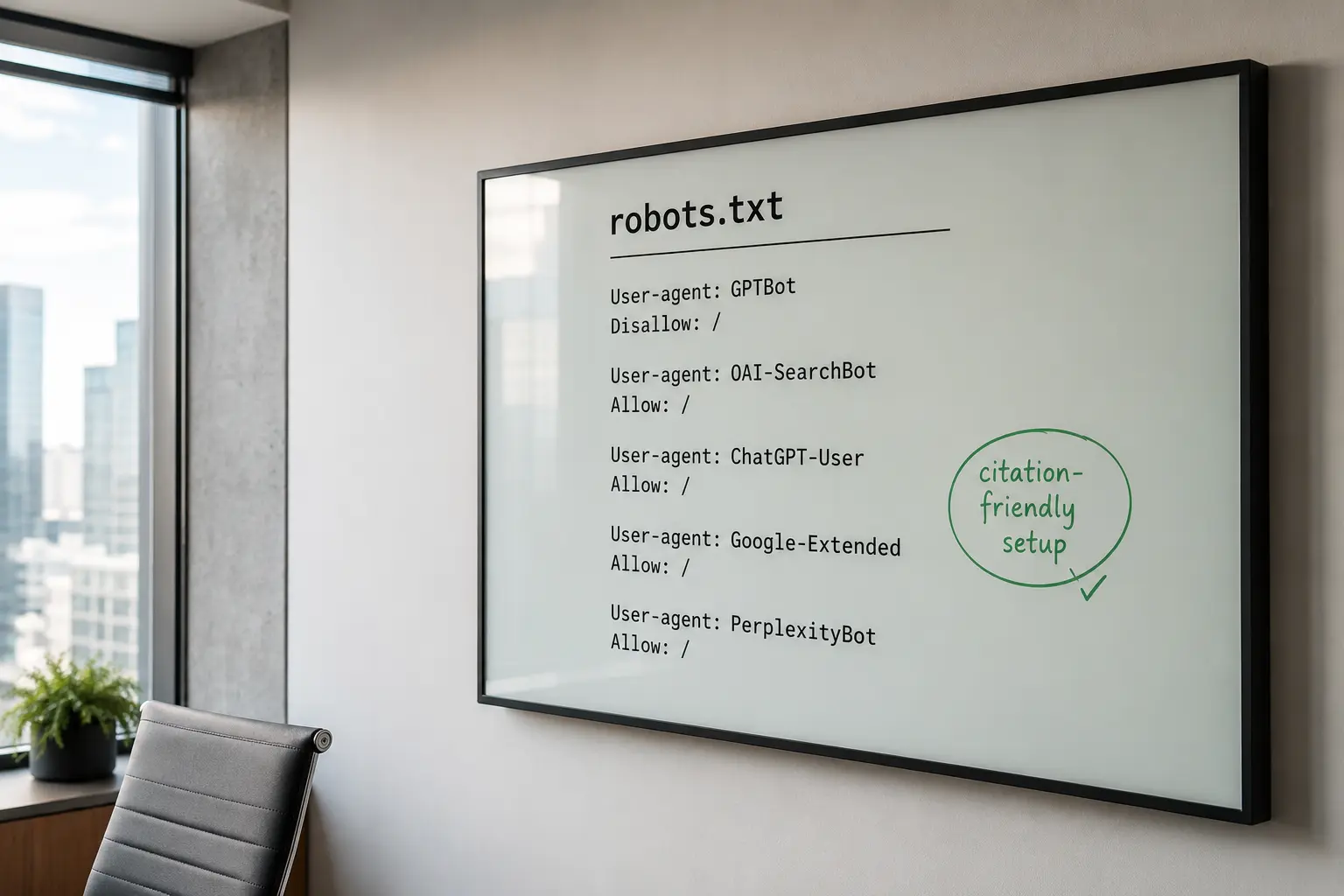
Keep a clean, updated robots.txt file to ensure key pages are crawlable. Use an XML sitemap to help search engines navigate your site efficiently.
Avoid broken links, redirect loops, and heavy scripts that block crawlers. Optimize page speed and mobile responsiveness to improve discoverability.
Optimizing for the AI-Driven Search Era
LLM citations represent a fundamental shift in how content gets discovered. Traditional SEO focused on ranking and clicks. LLM optimization focuses on being the answer AI trusts.
To succeed, create content that's authoritative, well-structured, and semantically relevant. Use formats like FAQs, listicles, and comparison tables that AI can easily parse. Seed your content in places LLMs are likely to scrape, from your own site to third-party platforms and community hubs.
Most importantly, maintain your content. Keep it current, accurate, and aligned with user intent. The brands that win in the AI-driven search era will be those that consistently deliver value, not just for algorithms, but for the people asking the questions.
Getting cited by LLMs isn't about gaming a system. It's about becoming the trusted source that AI confidently references when users need answers.
Encourages immediate action tied to the promise of higher visibility.
.png)
Key Features
- Authoritative content boosts credibility and LLM citation chances.
- Semantic relevance aligns content with AI user intent.
- Structured data helps AI parse and reference content.
- Regular updates keep information fresh and trustworthy.
- Content clusters build topical authority across core themes.
Frequently Asked Questions?
What are LLM citations and why do they matter?
How can I optimize my content for LLMs?
What types of content do LLMs prefer for citations?
How can I build authority for LLMs to cite my content?
Why is regular content updating important for LLM citations?
Stay Ahead in the AI Search Era
AI-driven engines are reshaping how users discover brands. Let’s optimize your content for ChatGPT, Perplexity, and Google SGE to keep you visible and relevant.


.jpg)