How to Win Voice Search with AEO

Discover how Answer Engine Optimization (AEO) can enhance your voice search visibility and connect with users through AI assistants seamlessly.

November 6, 2025
By
Eden John
In
Build
Updated on :
November 6, 2025
 |
6 Min Read

Table Of Content

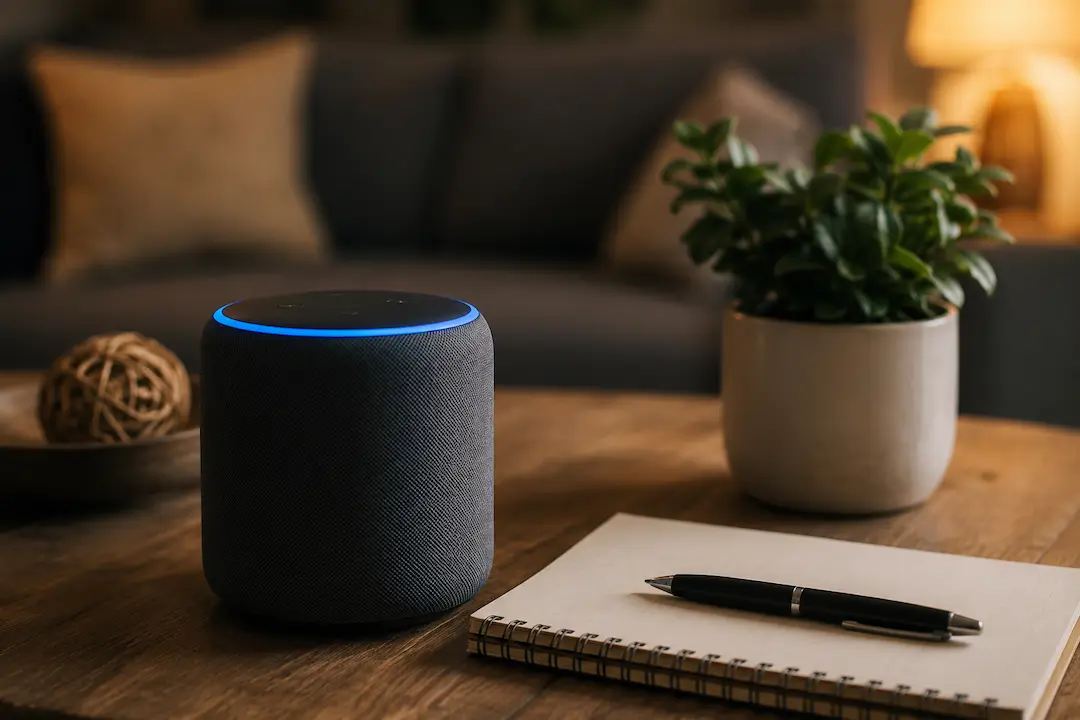
Voice search isn't a futuristic concept anymore; it's a daily reality. People are asking their phones, smart speakers, and car stereos for directions, recommendations, and answers to their most pressing questions. This shift from typing to talking has fundamentally changed how brands get discovered. To remain visible, businesses must move beyond traditional SEO and embrace Answer Engine Optimization (AEO).

This guide will explain what AEO is and why it's the key to dominating voice search. You'll learn actionable strategies to optimise your content for AI assistants like Google Assistant, Alexa, and Siri, ensuring your brand becomes the definitive answer your customers are looking for.

The Unstoppable Rise of Voice Search

The adoption of voice technology has been swift and widespread. It's integrated into our daily routines, reshaping how we interact with information and businesses. The numbers speak for themselves.

  • Daily Habit: Over 55% of adults use voice search daily, a figure that jumps to 70% for younger users.
  • Smart Speaker Boom: Smart speaker ownership has soared, now present in 35% of US households, making voice interaction a staple in the home.
  • Voice Commerce Growth: Voice commerce is on track to become a major retail channel, projected to generate over $40 billion by 2025.
  • Mobile Dominance: A staggering 60% of all voice queries are made on mobile devices, highlighting the on-the-go nature of modern search.

This data paints a clear picture: voice is no longer a niche behaviour. It's a primary method of search, and businesses that fail to adapt risk becoming invisible.

Understanding Voice Search Behaviour

To optimise for voice, you must first understand how it differs from traditional text search. People speak differently than they type. This fundamental distinction is the cornerstone of AEO.

Conversational Queries

Voice searches are inherently conversational. A user is more likely to ask, “What are the best cafes near me that are open now?” instead of typing “cafes open near me.” Queries are longer, more specific, and almost always phrased as a complete question. This conversational pattern means your content needs to provide direct, natural-sounding answers.

High Intent and Urgency

Voice queries often signal immediate intent. Searches like “How do I change a flat tyre?” or “Call the nearest pizza place” show a user needs an answer or a service right now. A significant portion of these searches also carry local intent, connecting users with businesses in their immediate vicinity. AI assistants are also becoming adept at understanding context, allowing them to handle follow-up questions without needing the user to repeat the initial query.

Ready to Gain More Visibility?

Increase your visibility in AI-driven search with Answer Engine Optimization. We’ll help your business rank in Google SGE, ChatGPT, and Bing Copilot, driving more traffic, trust, and conversions while strengthening your online presence.

Send My Analysis

Core AEO Strategies for Voice Search

Answer Engine Optimization (AEO) is the practice of structuring your content to provide direct, concise answers that AI assistants can easily find and deliver. It's about becoming the single, authoritative source that an AI chooses to read aloud.

Here’s how to build a powerful AEO strategy.

Embrace Natural Language and Questions

Your content must mirror the way people speak.

  • Create FAQ Pages: Develop comprehensive FAQ sections that directly address common customer questions. Use tools like AnswerThePublic and AlsoAsked to discover the real questions your audience is asking.
  • Use Question-Based Headings: Structure your blog posts and articles with H2s and H3s that pose a question, like "How Do I Choose the Right Running Shoes?" or "What Is AEO?". This format makes it easy for AI to pull your content as an answer.
  • Keep Answers Concise: Aim to answer questions directly and briefly, ideally within 40-60 words. This length is perfect for featured snippets, which are often used as the source for voice search answers.

Structure Content for Clarity

AI assistants prioritise content that is well-organised and easy to interpret.

  • Use Lists and Tables: Use bullet points, numbered lists, and tables to break down information into a digestible format. This structure is highly favoured for featured snippets.
  • Implement Schema Markup: Schema markup is code you add to your website to help search engines understand the context of your content. Implementing specific schema types like FAQPage, HowTo, and LocalBusiness gives voice assistants the contextual clues they need to serve your content as a rich result. Tools like Google’s Structured Data Markup Helper can simplify this process.

Dominate Local Voice Search

Since many voice queries are local, optimising your local presence is critical.

  • Perfect Your Google Business Profile: Ensure your Google Business Profile (GBP) is complete, accurate, and regularly updated. This includes your business name, address, phone number, hours, and services. A well-maintained GBP is a primary source of information for local voice searches on Google Assistant.
  • Encourage Customer Reviews: Positive reviews on platforms like Google and Yelp not only build trust but also improve your visibility in local search results used by AI assistants.

Optimising for Specific AI Assistants

While the core principles of AEO apply across the board, each major AI assistant has unique characteristics.

Google Assistant

Google Assistant relies heavily on Google's own search index and Knowledge Graph. To optimise for it, focus on winning featured snippets. When a user asks a question, Google Assistant often reads the content directly from the featured snippet result. Additionally, a strong local SEO strategy is vital, as the assistant pulls heavily from Google Maps and GBP listings for "near me" queries.

Amazon Alexa

Alexa's ecosystem is built around "skills" and data partnerships. While it uses a search engine (Bing) as a fallback, it prioritises its own data sources. To appear in Alexa's results, ensure your business information is listed and optimised on platforms like Yelp, as Alexa frequently uses it for local business recommendations. Developing a custom Alexa Skill can also provide a direct line to your customers.

Apple Siri

Siri pulls information from a variety of sources, including Bing for general web queries and Apple Maps for local information. Therefore, optimising for Siri requires a dual approach: ensure your website performs well on Bing and that your business details are accurate and complete in Apple Maps.

The Future is Spoken

The shift to voice search represents one of the most significant changes in digital marketing. The brands that succeed will be those that stop thinking only in terms of keywords and start thinking in terms of conversations.

By implementing a robust AEO strategy, you can position your business to be the go-to answer for a new generation of searchers. Start by understanding the questions your audience asks, structure your content to provide clear and direct answers, and optimise your technical and local presence. The future of search is here, and it’s speaking your customer's language. Are you ready to answer?

Growth Focused

Encourages immediate action tied to the promise of higher visibility.

Send My Analysis

Key Features

Implement schema markup to enhance AI content understanding.

Strengthen local SEO for voice-driven business searches.

Focus on concise, direct answers for AI assistants.

Adapt strategies for Google Assistant, Alexa, and Siri.

Frequently Asked Questions?

Is AEO only relevant for voice search?

Drop down icon

Can small businesses benefit from AEO?

Drop down icon

What types of content work best for AEO?

Drop down icon

Is AEO suitable for all industries?

Drop down icon

What tools can help with AEO?

Drop down icon

Is AEO only relevant for voice search?

Drop down icon

Can small businesses benefit from AEO?

Drop down icon

What types of content work best for AEO?

Drop down icon

Is AEO suitable for all industries?

Drop down icon

What tools can help with AEO?

Drop down icon
Eden John | Founder & CEO
Eden John, CEO & Founder of Skyscale, leads with a passion for data-driven digital growth. He specializes in SEO, AEO, and GEO optimization, helping global brands scale visibility and achieve measurable results through smart, AI-powered strategies.

Stay Ahead in the AI Search Era

AI-driven engines are reshaping how users discover brands. Let’s optimize your content for ChatGPT, Perplexity, and Google SGE to keep you visible and relevant.

Send My Analysis

Related Blogs

November 14, 2025
The Impact of AI on Local Business Growth in Melbourne
November 14, 2025
AI & Digital Marketing: Australia's Next Chapter
November 14, 2025
How AEO Can Secure Your Business Future in Victoria

Let’s Get Your Brand Ranking in Gemini

If your business isn’t cited in Gemini’s AI answers, you’re invisible to a fast-growing share of searchers.
We’ll help you secure AI-first visibility and put your brand where decisions are made.

Copyright ©2025 Skyscale. All Rights Reserved.