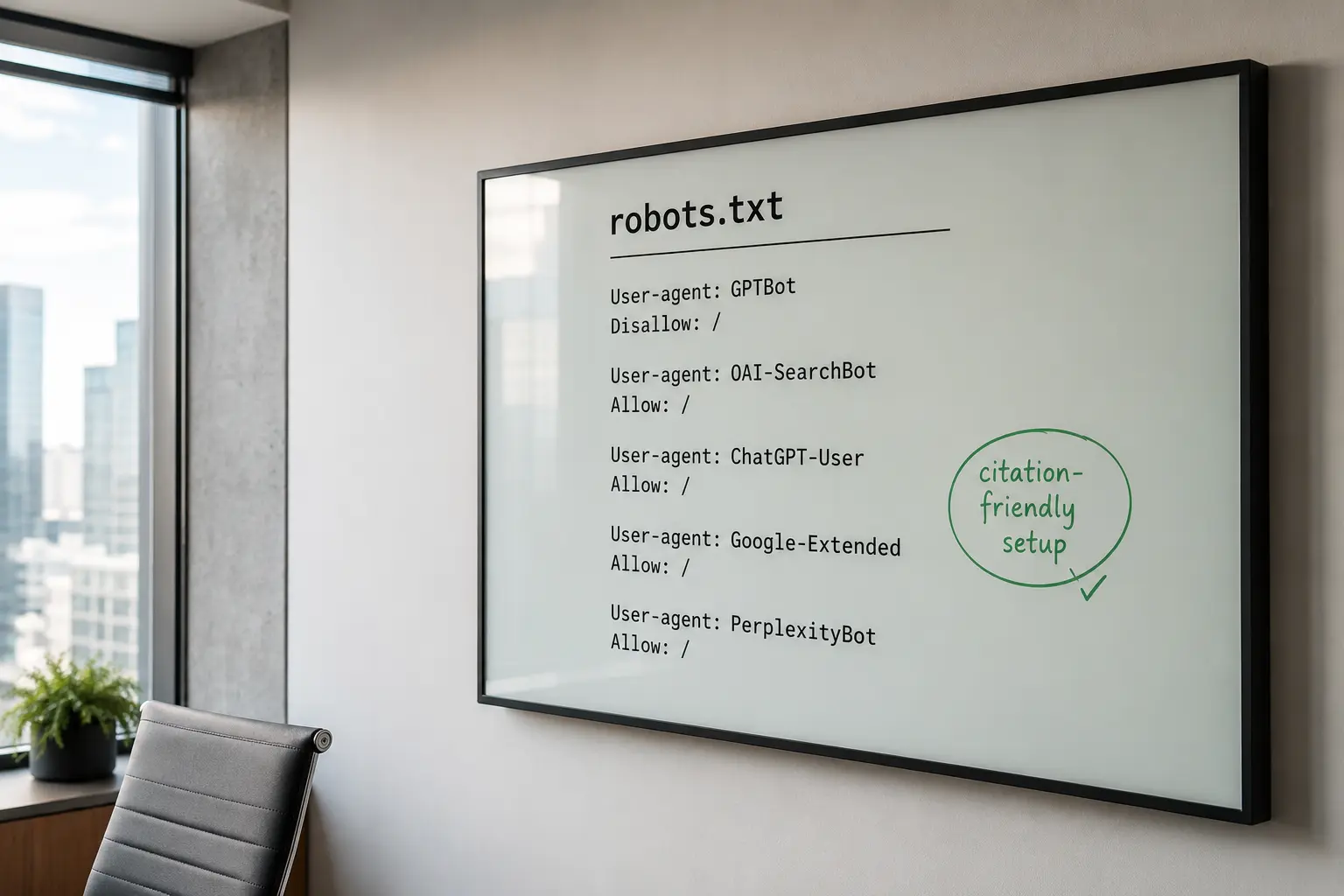
Why your traffic is shifting to AI answers
These AI engines do not just rank pages, they read, interpret and directly quote your content to answer user queries, which fundamentally changes how content gets discovered.
Organic traffic to many sites is falling, not because content got worse, but because search results pages now keep users inside features like AI Overviews and answer boxes instead of sending them onward, a shift that agencies tracking AI discoverability at Orbit Media have documented closely. When AI answers the question directly, the low-intent click disappears.
This demands a new approach built on answer engine optimisation and generative engine optimisation: structuring your site so AI can understand, extract and cite your content as the definitive answer.
The traffic you are losing does not have to vanish, it can be converted into something more durable, a citation that positions your brand as the trusted source.
Understanding AEO and GEO
Answer engine optimisation focuses on optimising content to directly answer user questions across AI-driven platforms, so rather than only driving traffic to your site, AEO ensures your expertise becomes the source behind AI-generated responses, the foundation explained in what AEO is.
Generative engine optimisation takes this further by helping your entire website appear in AI-generated answers and summaries, making your brand the trusted authority AI engines consistently reference, as detailed in what GEO is.
Both recognise a fundamental truth: AI engines prioritise clarity, structure and credibility over traditional ranking factors, so your goal shifts from ranking a page to becoming the go-to source AI confidently quotes.
Understanding the relationship between the two, covered in AEO versus GEO, helps you optimise for both the specific answer and the broader authority.
From clicks to citations: why this matters now
A large and growing share of solution-based queries now receive direct answers through AI Overviews or featured snippets, which means users increasingly get their information without clicking through, making it essential that you are the trusted source behind those answers.
AI systems extract key facts from your content, summarise them into natural-language responses, and attribute sources directly within results, so visibility now means being quoted, not just ranked.
For businesses this is both a challenge and an opportunity. Traditional traffic patterns may shift, but becoming an AI-cited source can dramatically increase brand authority and recognition across your industry, and research from SEO platforms like Authoritas shows AI engines increasingly favour genuine, verifiable expertise over manufactured authority.
That is why becoming the cited source is the goal, the approach behind crafting content cited by LLMs and understanding how AI selects sources.
Recovering lost visibility starts with diagnosis, not panic. Look at which pages lost informational traffic and ask what questions those pages were answering, because those are precisely the queries AI is now intercepting.
Then prioritise the pages tied to high-intent, commercially valuable questions, since a citation there is worth far more than a recovered click on a low-intent query. The aim is not to claw back every lost visit, it is to make sure that when AI answers the questions that matter to your business, your brand is the source it names.
That reframing, from chasing clicks to earning citations, is what turns a traffic problem into a positioning advantage.
Structuring content for AEO
Every page should prioritise clarity and scannability, because AI engines excel at processing well-organised information, which makes structure your competitive advantage.
Start with a direct summary answering your main query in two to three sentences, since this immediate response increases your chances of being featured in AI Overviews and voice results.
Then use natural questions as headings with H1, H2 and H3 tags that mirror how people actually search, so instead of "Product Features," try "What features make this product unique?", aligning with conversational search patterns.
Bullet points and numbered lists make content scannable for both humans and AI, helping engines quickly identify and extract key information, and you should explain context, not just what something is but why it matters, because AI favours comprehensive answers that provide both immediate value and deeper understanding.
These principles echo the snippet and overview tactics in optimising for AI Overviews and the practical fixes in optimising your AEO strategy.
Content strategies for AEO
Focus on user intent and conversational queries, because people are asking longer, more specific questions, and your content should directly address these natural-language patterns, the discipline behind mastering search intent.
Question-research tools such as Mangools reveal the frequently asked questions surrounding your target keywords, so you can create content that naturally answers what your audience is genuinely asking rather than guessing.
Provide short, punchy answers followed by in-depth explanations, a layered approach that satisfies both AI engines looking for quick extracts and users seeking comprehensive information.
And incorporate real-world data to enhance credibility, because statistics, case studies and concrete examples make your content more trustworthy and quotable for AI systems, reinforcing the E-E-A-T that AI rewards. Pairing direct answers with genuine evidence is what turns a page into a citable source.
Technical SEO, schema and mobile
Schema markup plays a crucial role in helping AI understand your content's context, so implement Organization, WebSite, Article, FAQPage and HowTo schemas to provide clear signals about your content's structure and purpose.
Structured data acts as a bridge between human-readable content and machine understanding, so the more context you provide, the better AI engines can interpret and appropriately cite your expertise, the foundation covered in structured data for AEO.
Mobile optimisation and voice considerations matter just as much. The majority of search traffic now comes from mobile devices, and a meaningful share of users rely on voice, as digital-behaviour data from sources like DataReportal consistently shows, so your content must perform flawlessly across every interface.
Fast, mobile-friendly pages are also easier for AI crawlers to read and trust, which feeds directly into winning voice search and a clean generative AI visibility audit.
The AI search platform landscape
The platforms reshaping discovery are no longer a single search engine. Google's AI Overviews, ChatGPT Search, Bing Copilot, Perplexity and newer AI-native engines like You.com all synthesise answers from multiple sources, each with its own way of selecting and attributing them.
This fragmentation means your content needs to be clear and well-structured enough to be understood by all of them, not optimised for one.
Monitoring how your content performs across these different platforms is now part of the job, because being cited in one does not guarantee being cited in another.
Tracking that visibility, alongside the citation and ROI measures that matter, tells you where you are already the trusted source and where you still need to earn that position, across ChatGPT, Perplexity and Gemini.
Becoming the AI-cited authority
Leading brands are already seeing results from AEO. Companies that structure content with direct answers, clear headings and comprehensive FAQs report increased visibility in AI-generated responses, and businesses implementing question-based structures and schema have seen their expertise cited more frequently, lifting brand authority and industry recognition.
The payoff is not just recovered visibility, it is a stronger position: being the source AI quotes signals credibility in a way a ranking never did, the brand effect explored in how AEO builds brand trust.
That authority compounds across channels, because the same clarity and credibility that earn AI citations also strengthen how your brand is perceived everywhere it appears, a connection brand-monitoring platforms like Sprout Social track across the wider digital landscape.
As natural language processing grows more sophisticated, AI engines will increasingly favour content that demonstrates genuine expertise and provides comprehensive, trustworthy answers, so the businesses investing in AEO-friendly structures today will be best positioned for tomorrow's AI-driven results.
Building your AEO foundation, starting now
AEO is more than another SEO technique, it is the foundation for how brands will be discovered in an AI-first world.
By structuring content for clarity, implementing proper schema and focusing on direct, valuable answers, you position your expertise to be the source AI engines choose first, and the supporting tactics in a strong FAQ strategy make that even easier to extract.
The shift toward answer engines is not coming, it is already here, so the question is not whether to adapt but how quickly you can transform your content structure to thrive.
Start with your most important pages, implement clear question-and-answer formats, and expand from there, building across AI search and AEO. A free AI visibility audit and SkyScale's services are the fastest way to find the lost traffic and turn it into citations.


.svg)
.svg)
.svg)
.svg)
.svg)




.svg)

.svg)


.svg)
.svg)
.svg)

.svg)
.svg)