

For years, search engine optimisation (SEO) has been the cornerstone of digital marketing. Brands have invested heavily in keyword research, link building, and on-page tactics, all with a singular goal: climb the search engine rankings and win the click. But the digital landscape is undergoing a monumental shift. The rise of AI assistants, voice search, and generative AI is changing how we find information, moving us from a world of search results to a world of direct answers.
This evolution marks the arrival of Answer Engine Optimisation (AEO). It’s a new discipline focused on structuring content so AI systems like ChatGPT, Google’s AI Overviews, and Perplexity can trust, extract, and cite your expertise. AEO isn't here to replace SEO. Instead, it’s a critical complement, ensuring your brand is not just discoverable on a search results page, but is the definitive answer within AI-driven conversations. Understanding how to integrate both is no longer optional, it's essential for future-proofing your content strategy.
Understanding SEO: The Foundation of Discovery
Search Engine Optimisation is the practice of enhancing a website to improve its visibility and ranking on search engine results pages (SERPs). The ultimate goal has always been to drive organic, or unpaid, traffic by appearing at the top of the list for relevant search queries.
The core components of a traditional SEO strategy include:
- Keyword Research: Identifying the terms and phrases your audience uses to find information related to your industry.
- On-Page Optimisation: Refining content, meta tags, and internal linking to align with target keywords and user intent.
- Link Building: Acquiring backlinks from reputable websites to build authority and credibility in the eyes of search engines.
The Emergence of AEO: Optimising for Answers
While SEO targets search engine algorithms, Answer Engine Optimisation targets the AI systems that power direct answers. AEO involves structuring your content in a way that is easily digestible for natural language processing (NLP) and machine learning (ML) models, allowing them to pull your information directly into their responses.
The rise of AEO is driven by a few key trends:
- Voice Search: The increasing use of voice assistants like Alexa and Google Assistant means users are asking questions conversationally and expecting immediate, spoken answers.
- AI Assistants: Platforms like ChatGPT, Microsoft Copilot, and Google Gemini are becoming primary sources of information, bypassing traditional search results entirely. Knotch data shows that direct traffic from large language models (LLMs) to enterprise sites more than doubled from late 2024 to mid-2025.
- Zero-Click Searches: A significant portion of searches now end without a user clicking on any link. A 2024 analysis by SparkToro revealed that only about 36% of Google searches in the U.S. resulted in a click to an external website. This means being the answer itself is often more valuable than ranking below it.
AI Overviews: Google's AI Overviews, which provide AI-generated summaries at the top of SERPs, are becoming more common. Semrush noted their presence on roughly 13% of searches by March 2024, particularly for informational queries.
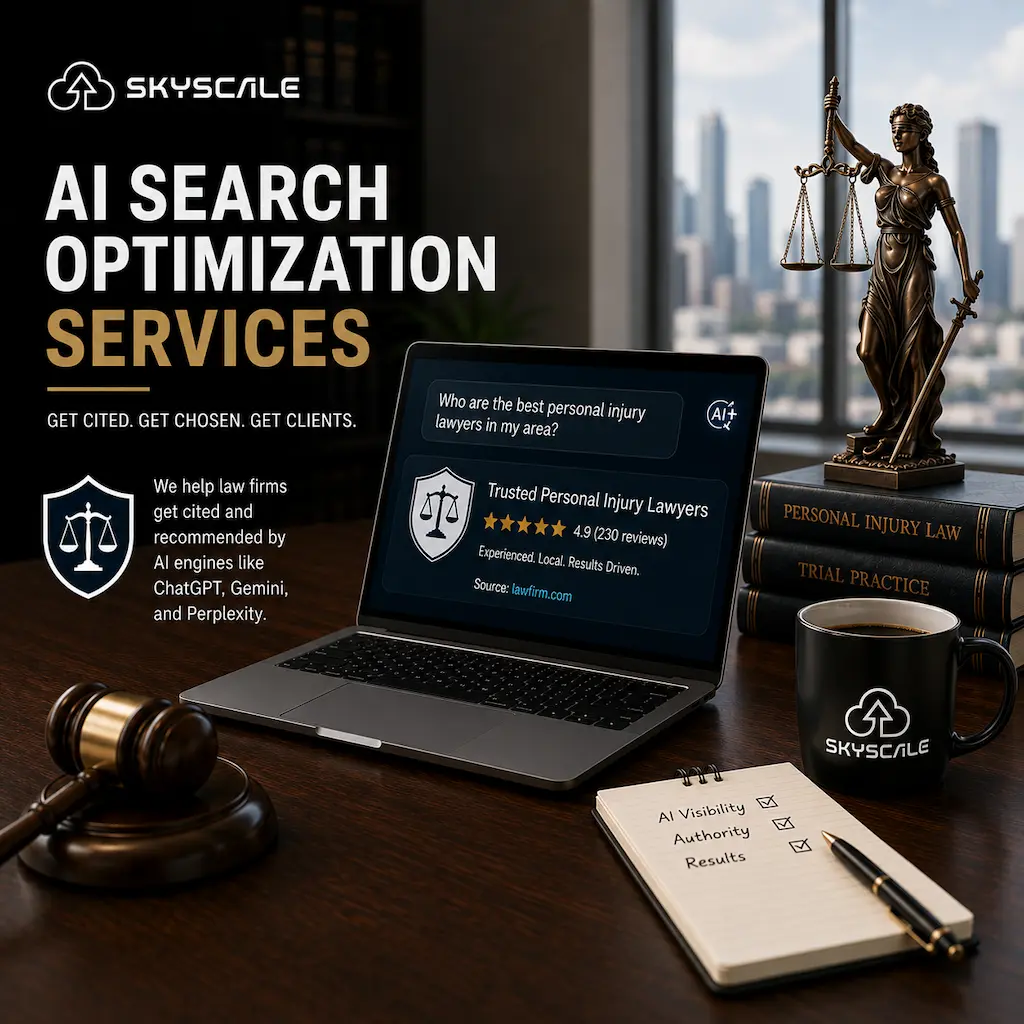
As answer engines replace rankings, make sure your brand is the one AI selects. Optimise for direct responses, authority, and AI visibility.
.png)
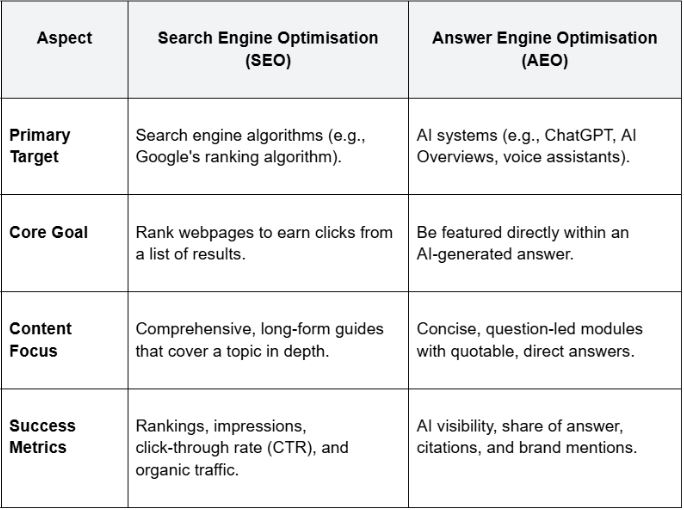
AEO vs. SEO: The Key Differences
Though SEO and AEO share the goal of increasing visibility, their approaches and target endpoints differ significantly.
Why Answer Engine Optimisation Matters Now
Ignoring AEO means risking invisibility in the channels where your audience is increasingly seeking information. Direct answers are becoming the new standard, especially in industries where consumers need immediate, trustworthy information.
Think of healthcare, where a user might ask their phone for the side effects of a medication. Or e-commerce, where a customer wants a quick comparison between two products. In these moments, being the cited source in an AI-generated answer builds immense trust and authority. The goal is no longer just to rank; it’s to become the answer.
How to Implement an AEO Strategy
Optimising for answer engines requires a shift in how you structure and present content. Here are six actionable steps to get started:
- Lead with the Question: Structure your content around the specific questions your audience is asking. Use these questions as headings (H2s or H3s) and provide a clear, concise answer directly underneath.
- Use Structured Data: Implement schema markup (like FAQ, How-To, and Organisation schema) to explicitly tell AI systems what your content is about. This makes it easier for them to parse and feature your information.
- Adopt a Conversational Style: Write in natural language that mirrors how people speak. This is especially important for voice search optimisation, where users ask long, conversational questions.
- Embrace Clarity and Brevity: Use lists, tables, and short paragraphs to make your content easy to scan and extract. AI models favour content that is well-organised and unambiguous.
- Cite Your Sources: Build trust by including citations and linking to reputable, up-to-date sources. Undated statistics or unsubstantiated claims are rarely featured in AI answers.
- Ensure Authority and Trustworthiness: Consistently demonstrate your expertise. Ensure author information is clear and that your brand is presented as a credible source across all platforms.
Integrating SEO and AEO for a Unified Strategy
The most effective content strategy doesn’t choose between SEO and AEO, it integrates them. The two disciplines are complementary, as both reward content that is clear, useful, authoritative, and well-structured.
Think of it this way:
- SEO builds your overall authority and ensures your website has a strong foundation of visibility.
- AEO enhances that visibility by positioning your content to be featured in AI-driven answer formats.
Your comprehensive guides built for SEO can be broken down into smaller, answer-first modules for AEO. For example, a long blog post can be repurposed into a series of Q&A threads for platforms like Reddit or Quora, with each piece linking back to the canonical guide on your site.
Preparing for the Future of Content Marketing
The evolution of search is accelerating. As AI becomes more sophisticated, the line between searching for information and conversing with an AI will continue to blur. Businesses that adapt now will be positioned to lead in this new era.
By embracing both SEO and AEO, you create a resilient, future-proof content strategy that ensures your brand remains visible and relevant, no matter how your audience chooses to find information.
Key Features
- Shift from SEO rankings to AI-driven answers.
- Structure content for clarity, authority, and retrieval.
- Implement schema markup to enhance AI comprehension.
- Combine SEO and AEO for unified visibility strategy.
- Optimise for voice, AI assistants, and zero-click searches.
Frequently Asked Questions?

AEO, or Answer Engine Optimization, focuses on optimizing content to be understood and trusted by AI-powered search engines, like virtual assistants and chatbots. Unlike traditional SEO, which prioritizes ranking on search engine results pages, AEO targets provide clear and authoritative answers.
Optimizing for interpretation ensures that your content is easily understood and trusted by AI models. This makes it more likely for your content to be selected and presented as the correct answer to user queries, further solidifying your brand's expertise and reliability.
Absolutely! SEO and AEO work hand in hand. While SEO helps improve visibility and organic traffic, AEO ensures your content is positioned as the authoritative answer when AI-driven tools retrieve information. A balanced approach ensures future-proof success.
To strengthen your content's authority, focus on accuracy, clarity, and credibility. Use trusted sources, include citations, provide context, and structure your content for both readability and machine interpretation. This will make your content stand out as reliable and informative
Several tools can assist with AEO, including structured data markup tools, keyword research tools, and content audit platforms. Leveraging advancements in AI-focused analytics can help you better understand how AI interprets and ranks your content.