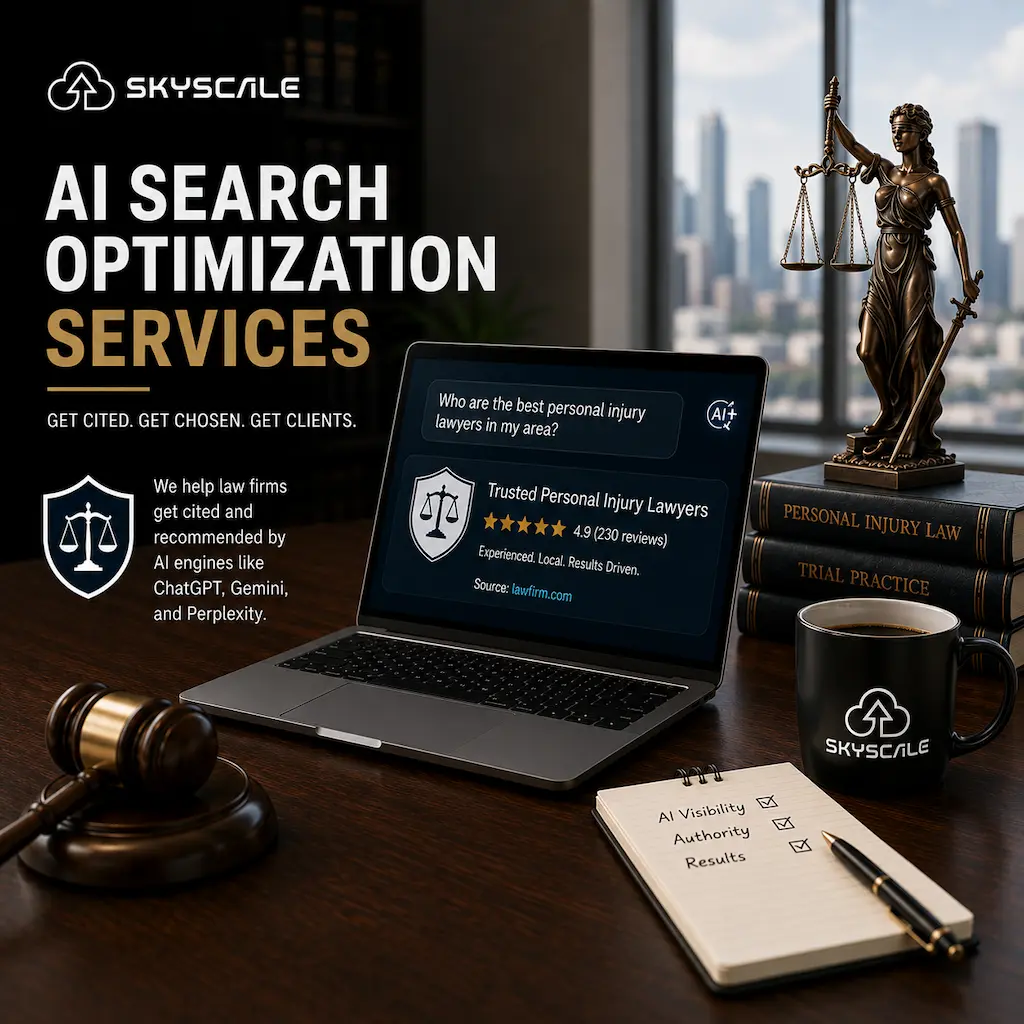


The "SEO is dead" panic is back, this time fuelled by AI. But what if we're looking at it all wrong? Search isn't a platform; it's a human behaviour. Whether someone is typing into Google or prompting ChatGPT, they are still asking questions that require expert, trustworthy content. Search isn't dying, it's fracturing across new interfaces like AI overviews, chatbots, and social platforms.
This transformation requires a new playbook. Traditional SEO tactics are evolving, making way for strategies that prioritise authority and user trust above all else. This guide will walk you through the key SEO strategies for the AI era, explaining how to adapt your approach to maintain visibility and thrive in a world where AI is reshaping how we find information.
Understanding Generative Engine Optimisation (GEO)
Generative Engine Optimisation, or GEO, is the practice of optimising your content to be found, understood, and recommended by generative AI models. While the name is new, its foundations are built on the same principles that advanced SEO professionals have valued for years: creating high-quality, authoritative content that genuinely helps users.
GEO aligns with established best practices by focusing on:
- Structured Data: Using schema markup to provide clear context for search engines and AI.
- Media Mentions: Earning brand mentions and citations across trusted, authoritative publications.
- Expertise: Showcasing first-party research and expert quotes to establish credibility.
AI models rely on these signals to determine which sources to trust. So, while the interface is changing, the core need for credible, well-structured content remains the same.
The Changing Search Landscape
User search behaviour is undergoing a significant shift. People are moving beyond simple keywords and are now using complex, conversational queries. AI-powered tools like ChatGPT and Google’s AI Overviews are accelerating this change, offering direct, comprehensive answers without the need to click through multiple links.
The statistics paint a clear picture of this transition. While chatbots currently represent only a small fraction of search engine traffic (around 3%), two-thirds of consumers believe AI will replace traditional search within the next five years. Furthermore, a 2023 Statista survey revealed that 13 million people in the United States already use generative AI as their primary search tool, a number projected to grow to over 90 million by 2027.
This data highlights a critical insight: users are experimenting with AI for its clean interface and faster answers, seeking to escape the friction of ad-cluttered search results. Even though 49% of AI search users still click on links for more detail, the trend towards zero-click searches is growing, making brand visibility within AI-generated responses more important than ever.
Search is evolving fast. Future-proof your strategy with AI-ready SEO built for generative engines, answer visibility, and smarter discovery.
.png)
Key SEO Strategies for the AI Era
To succeed in this new environment, your SEO strategy must evolve. The focus is no longer just on ranking for keywords but on becoming a trusted source of information that AI models will cite.
Focus on High-Quality, Authoritative Content
The cornerstone of modern SEO is creating helpful, reliable, people-first content. Google's commitment to E-E-A-T (Experience, Expertise, Authoritativeness, and Trustworthiness) is stronger than ever. AI models are being trained to prioritise content from authors and brands that demonstrate real-world experience and deep knowledge in their field. Move away from simply loading content with keywords and instead focus on providing genuine value that answers a user's question thoroughly.
Optimise for Conversational Queries
As voice search and AI assistants become more common, users are posing questions in natural language. Your content needs to reflect this shift. Use tools like AnswerThePublic and analyse Google’s "People Also Ask" section to identify conversational queries relevant to your industry. Structure your content, particularly with FAQ sections, to provide direct answers to these questions.
Maintain Technical SEO Excellence
While content is king, technical SEO remains the foundation upon which it stands. A technically sound website is easier for both traditional search crawlers and AI systems to access and understand. Key technical elements include:
- Site Speed: Fast loading times improve user experience.
- Mobile Usability: Ensure your site is fully responsive and easy to navigate on mobile devices.
- Structured Data: Implement schema markup to give AI models context about your content.
- Crawlability: A clean site architecture ensures that all your valuable content can be discovered.
Adapting to AI-Driven Misinformation and Building Trust
A significant concern for both consumers and marketers is the potential for AI-driven misinformation. A recent study found that 78% of marketers and 68% of consumers worry about this issue. Brands that can establish themselves as a source of truth will gain a powerful competitive advantage.
To build trust and combat misinformation, you should:
- Establish a Proprietary Source of Truth: Use your own first-party data, research, and expert insights to create unique, verifiable content that AI can't easily replicate.
- Ensure Source Transparency: Clearly attribute information and showcase the credentials of your authors and experts.
- Fact-Check Rigorously: Implement a "human-in-the-loop" workflow to review all AI-assisted content for accuracy and bias before publication.
Interestingly, 80% of consumers report having a neutral or positive attitude toward trusting brands that use AI-generated content, provided it is credible and transparent. This shows that the market is open to AI, as long as it's done responsibly.
Unifying Content and Building Authority
In the AI era, search is fracturing across multiple platforms, from Google and Bing to ChatGPT and TikTok. To maintain visibility, brands need a unified content strategy that builds authority across all these channels.
This means ensuring your brand message is consistent everywhere your audience might be. The same tactics that earn backlinks and social engagement, like producing original research and securing expert mentions, also improve your chances of being featured in AI summaries. Digital PR and brand visibility are now critical inputs for Large Language Models (LLMs).
Measuring SEO in the Age of AI
Traditional metrics like click-through rates are becoming less reliable as zero-click searches increase. Marketers must adapt by tracking new KPIs that reflect visibility in an AI-driven world. Despite the rapid consumer adoption of AI search tools, only 22% of marketers are currently monitoring their brand's visibility or traffic from LLMs.
Start tracking:
- Brand mentions within AI Overviews and chatbot responses.
- Traffic and engagement from sources identified as AI-driven.
- The ROI of content by measuring how often it's used as a source in AI-generated answers.
AI can also be used to improve content quality. Marketers are already using AI for social content creation (44%), SEO analysis (43%), and data reporting (40%), proving its value in streamlining workflows.
Embrace AI as an SEO Amplifier
The rise of AI is not the end of SEO; it's a fundamental evolution. The core principles of providing valuable, authoritative content are more important than ever. AI should be viewed not as a threat, but as a powerful tool that can amplify your strategic efforts.
By focusing on E-E-A-T, optimising for conversational search, and building a unified brand presence, you can ensure your content is what AI systems, and human users, turn to for answers. The brands that adapt and innovate will not only survive but thrive in this new landscape, securing their visibility for years to come.
Key Features
- AI transforms SEO from keywords to contextual authority.
- GEO optimizes content for generative AI visibility.
- E-E-A-T builds trust and search credibility online.
- Optimize for conversational, question-based search behavior.
- Track AI citations and brand visibility metrics.
Frequently Asked Questions?

AI is transforming SEO by shifting focus from keywords to context, authority, and trust. Generative AI tools like ChatGPT and Google AI Overviews prioritise clear, expert, and people-first content that delivers direct answers.
GEO is the process of optimizing content for discovery and recommendation by generative AI models. It focuses on structured data, brand authority, and credibility so AI systems can easily interpret, trust, and cite your content.
E-E-A-T, Experience, Expertise, Authoritativeness, and Trustworthiness, signals to AI and search engines that your content is credible. Demonstrating real-world knowledge and citing reliable sources increases visibility in AI-driven search.
Use natural-language phrasing and question-based headings that mirror how users speak. Add FAQs, structured schema, and concise answers so AI engines can extract relevant insights for featured snippets and AI Overviews.
Beyond clicks and rankings, monitor AI citations, brand mentions, and engagement from AI-driven platforms. Tracking these visibility metrics shows how your content performs in generative and conversational search ecosystem