Google AI Overview optimisation is now essential for brands that want visibility in AI-driven search results. As Google expands AI Overviews across more queries, businesses relying on traditional SEO alone risk losing clicks, authority, and organic traffic to competitors with better AI-ready content structures.
Optimising for AI Overviews requires more than adding keywords to a page. Google now prioritises content that is easy for AI systems to interpret, structure, and cite. This guide from Skyscale explains how to optimise content for Google AI Overviews using retrieval-focused formatting, semantic SEO, and authority-building strategies.
Understanding How AI Overviews Transform Search
AI Overviews represent Google's most significant search evolution since featured snippets. Unlike traditional results that display individual webpage links, AI Overviews gather information from multiple sources to create comprehensive, AI-generated summaries that appear above all organic results.
This shift changes user behaviour dramatically. When Google provides a complete answer directly in the search results, users often find what they need without clicking through to any website. Research shows that 63% of businesses have reported positive impacts from AI Overviews on their organic traffic and visibility, but this success isn't distributed evenly.
The opportunity lies in becoming a cited source. When AI Overviews reference your content, you gain prime screen real estate, effectively position #1 visibility above all traditional organic results. Even more compelling, links included in AI Overviews typically receive higher click-through rates than standard blue links for the same queries.
Perhaps most encouraging for content creators, 93.8% of links cited in AI Overviews come from sources outside the traditional top-10 results. This means high-quality, well-optimised content has a genuine opportunity to leapfrog established competitors and achieve unprecedented visibility.
How Google Chooses Sources for AI Overviews
Google chooses AI Overview sources based on relevance, authority, structure, and how easily AI systems can extract information from a page. Content that demonstrates expertise and answers queries clearly is far more likely to appear in AI-generated summaries.
What Signals Google Uses for AI Overview Citations
Google AI Overviews prioritise pages that provide direct answers, topical depth, and trustworthy information. Pages with clear semantic structure and strong contextual relevance perform better because AI systems can process them more efficiently.
Some of the strongest signals include:
- Clear answer-first formatting
- Strong topical authority
- Consistent entity relevance
- Updated and accurate information
- High-quality supporting content
- Structured headings and semantic flow
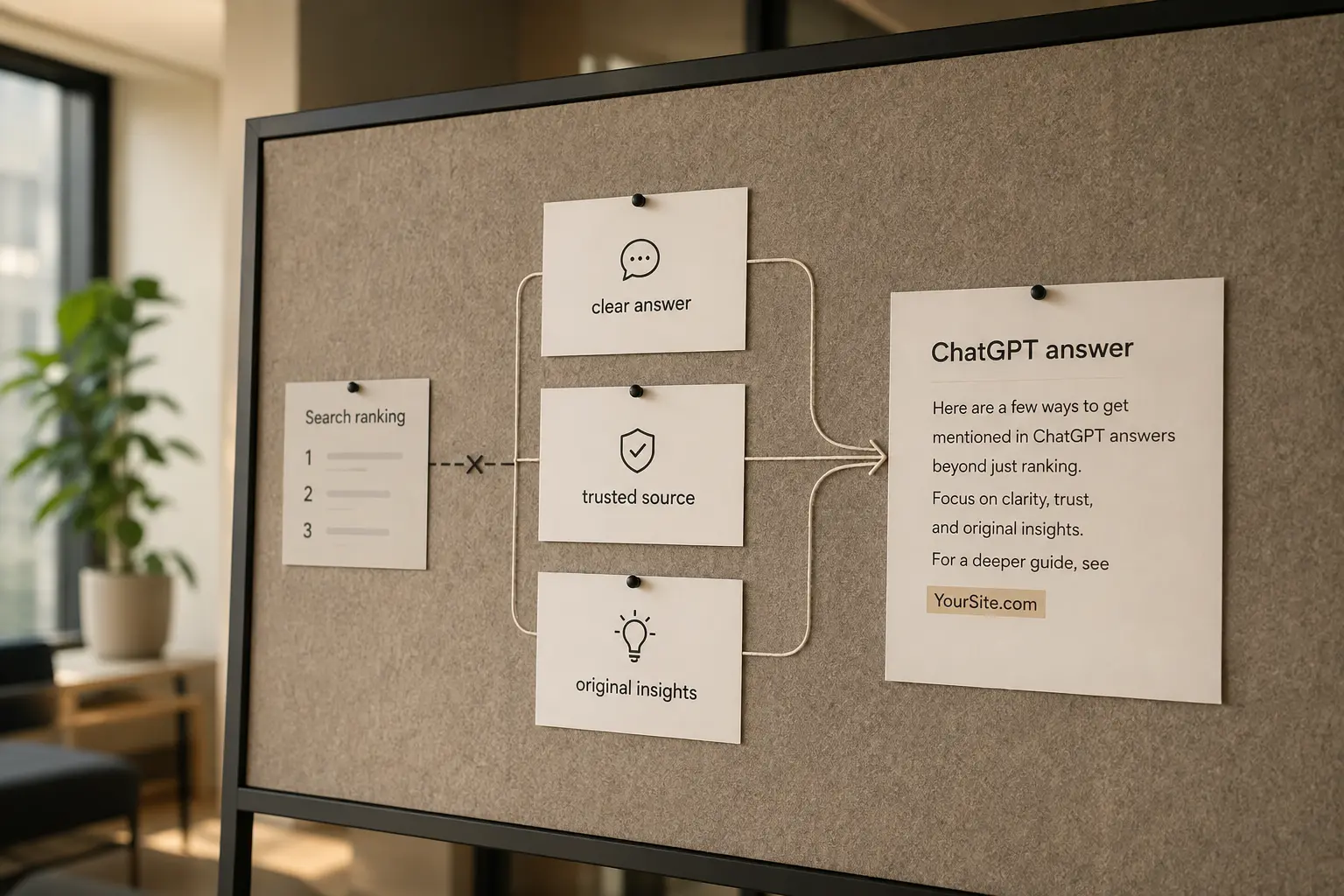
Most websites assume rankings alone drive AI citations, but in reality, retrieval clarity plays a major role.
Why Topical Authority Matters for AI Visibility
Topical authority helps Google understand whether your website consistently demonstrates expertise in a subject area. A single article about AI Overview optimization is helpful, but a broader ecosystem of related content creates stronger trust signals.
What we’ve seen in practice is that websites covering connected AI SEO topics often gain more AI Overview visibility over time.
Examples include:
- AI search optimisation
- semantic SEO
- structured data
- AI content retrieval
- Google SGE optimisation
- AI visibility measurement
This broader coverage improves contextual understanding across your domain.
How Content Freshness Influences AI Overview Rankings
AI Overviews favour content that reflects current search behaviour, platform updates, and emerging trends. Older content can still rank, but outdated information reduces trust and citation potential.
Refreshing content every few months helps maintain relevance. This can include:
- updating statistics
- improving examples
- adding new questions
- refining structure
- expanding topical depth
Even small updates can improve AI Overview impressions when they strengthen content quality.
Why Some Websites Get Referenced More Often
Google tends to cite websites that combine expertise, clarity, and strong content structure. Brands with consistent publishing patterns and well-organised information often become easier for AI systems to trust.
Here’s where things usually go wrong: many websites optimise heavily for keywords but ignore readability and retrieval formatting.
AI systems prefer content that:
- answers questions directly
- avoids unnecessary filler
- uses logical heading hierarchy
- provides contextual depth
- demonstrates real expertise
That combination increases the likelihood of citation across AI-driven search experiences.
Essential Strategies for AI Overview Optimisation
Content Chunking: Structure for AI Comprehension
AI systems excel at processing information that's organised into digestible, logical chunks. Transform your content by breaking large paragraphs into focused sections, each addressing a single question or concept with its own heading (H2, H3, or H4).
The key is front-loading each section with a bite-sized answer immediately after the heading. This single sentence should provide a complete response or summary for that particular topic. AI Overview algorithms favour this structure because it mirrors how they need to extract and synthesise information.
Consider restructuring existing content to follow a question-and-answer format. Instead of burying answers within lengthy paragraphs, make them immediately identifiable through clear headings and concise opening statements.
Harness Video Content for Enhanced Visibility
YouTube has emerged as one of the most frequently cited sources in AI Overviews, creating a powerful opportunity for brands willing to embrace video content. Creating videos that complement your blog posts significantly increases your chances of AI Overview inclusion.
Focus on how-to content, FAQ responses, and educational videos that directly address user questions. Ensure your YouTube profile features your brand logo, company bio, and links back to your website. This creates a cohesive brand presence that AI systems can recognise and reference.
Transform your successful blog posts into video content, mining People Also Ask sections for topic inspiration. Enable captions and optimise video descriptions with detailed information about both the topic and your brand authority.
Implement Strategic Content Summaries
Adding concise summaries at the beginning of your blog posts dramatically improves AI Overview selection chances. These summaries should be three to five sentences maximum, encapsulating your page's core message with a clear, direct answer to the primary query.
Think of these summaries as your pitch to AI systems, they need to understand immediately what value your content provides and why it deserves citation. Write them in simple, factual language that a grade 6-8 reading level can understand.
Leverage FAQ Content for Long-Tail Queries
Integrate unique, relevant FAQs within your blog posts to capture the longer-tail queries users ask AI systems. These FAQ sections should address specific questions your audience commonly asks, formatted with clear questions and concise answers.
Implement FAQ structured data markup to give Google clearer signals about your content structure. This technical enhancement helps AI systems understand and extract your question-and-answer content more effectively.
Refresh and Update Existing Content
AI Overviews favour fresh, current information. Regularly audit your existing content to ensure accuracy and relevance. Update statistics, answer new questions that have emerged since original publication, and remove outdated information or broken links.
Maintain original publication dates but clearly indicate when content was last updated. Add unique insights or perspectives that help your content stand out from competitors covering similar topics.
Google AI Overviews are changing search. Optimise your content step by step to earn citations, increase visibility, and stay competitive.
.png)
How to Structure Content for Google AI Overviews
Content structure directly affects how AI systems interpret, retrieve, and summarise information. Pages with clear semantic formatting are easier for Google AI Overviews to process and cite.
Using Answer-First Formatting for AI Retrieval
AI systems prioritise content that delivers immediate answers near the top of each section. This is why answer-first formatting has become one of the most important strategies for AI Overview optimization.
Instead of slowly building toward a point, begin sections with a concise explanation that directly addresses the query.
For example:
- Define concepts immediately
- Summarise key takeaways early
- Use short explanatory paragraphs
- Avoid burying answers in long introductions
This structure improves both readability and retrieval potential.
How Semantic Chunking Improves AI Understanding
Semantic chunking means dividing content into focused sections that each cover a single topic clearly. This helps AI systems identify relationships between headings, questions, and supporting information.
Strong semantic chunking usually includes:
- one core topic per section
- supporting H3 subsections
- short paragraphs
- standalone factual statements
- clear contextual transitions
Most AI Overview content performs better when sections can be extracted independently without losing meaning.
The Best Heading Structure for AI Search
Heading hierarchy helps Google understand topic relationships across a page. Well-structured headings improve crawlability and make information easier to retrieve during AI summarisation.
A strong structure typically follows:
- H1 for the primary topic
- H2s for major intent clusters
- H3s for supporting subtopics
Question-based headings also improve long-tail visibility because they align closely with how users search in AI-driven environments.
Writing AI-Readable Content Without Keyword Stuffing
AI-readable content should feel natural while still reinforcing topical relevance. Overusing keywords often weakens readability and reduces trust.
Instead of repeating exact-match phrases excessively:
- use semantic variations
- reinforce related entities
- explain concepts in practical language
- maintain natural sentence flow
Google AI Overviews increasingly reward clarity over keyword density.
Technical SEO Best Practices for AI Overview Optimisation
Technical SEO still plays an important role in Google AI Overview optimisation. Even strong content can struggle if search engines cannot properly interpret, crawl, or connect information across your website.
Schema Markup That Supports AI Visibility
Structured data helps Google understand the purpose and context of your content more clearly. While schema alone will not guarantee AI Overview inclusion, it improves interpretability.
Useful schema types include:
- FAQ schema
- Article schema
- Video schema
- Breadcrumb schema
- Author markup
Schema becomes especially important when content includes tutorials, FAQs, or educational resources.
Why Internal Linking Still Matters for AI Search
Internal linking helps Google discover relationships between pages and topics. This strengthens topical authority and improves semantic understanding across your site.
Effective internal linking should:
- connect related topics naturally
- reinforce core entities
- support user navigation
- distribute contextual relevance
For AI search optimisation, internal links help establish broader expertise around a subject.
Optimising Video Content for Google AI Overviews
Video content is becoming increasingly important for AI visibility. Google frequently references YouTube videos in AI Overviews because videos often provide fast, practical explanations.
To improve visibility:
- use descriptive video titles
- add detailed captions
- optimise video descriptions
- include supporting blog content
- implement video schema where possible
Educational and tutorial-style videos tend to perform best.
Improving Crawlability and Content Accessibility
AI systems rely on clean page structure and accessible content formatting. Pages overloaded with unnecessary scripts, poor heading structure, or fragmented layouts can weaken interpretability.
Important optimisation areas include:
- mobile responsiveness
- fast loading speed
- clean HTML structure
- logical heading hierarchy
- accessible text formatting
Most websites focus only on publishing content, but technical accessibility still influences how efficiently AI systems process information.
Sources That Win AI Overview Citations
Understanding which content types and sources AI Overviews favour provides strategic insight for optimisation efforts. YouTube and Reddit consistently rank among the most cited sources, indicating that AI systems value diverse content formats and community-driven insights.
More significantly, AI Overviews tend to cite content that addresses in-depth, comprehensive questions rather than simple, factual queries. This suggests an opportunity for thought leadership content that provides nuanced, expert perspectives on complex topics.
The focus should be on creating content that demonstrates genuine expertise and provides thorough, contextual answers to user questions. Surface-level content rarely receives AI Overview citations.
How to Optimise Existing Content for AI Overviews
You do not always need entirely new articles to improve AI Overview visibility. In many cases, updating and restructuring existing content can produce faster SEO and AI search gains.
Updating Older Blog Posts for AI Search
Older blog posts often contain valuable information but lack AI-friendly formatting. Small structural improvements can significantly improve retrieval potential.
Useful updates include:
- adding concise summaries
- improving headings
- inserting FAQs
- refreshing outdated statistics
- expanding thin sections
This approach is often more efficient than publishing large volumes of new content.
Adding AI-Friendly Sections Without Rewriting Everything
One of the safest optimisation methods is layering new sections into existing articles without changing core content. This preserves existing rankings while improving semantic depth.
High-impact additions usually include:
- implementation sections
- technical SEO guidance
- FAQ clusters
- examples and use cases
- AI retrieval formatting tips
This strategy aligns well with modern content refresh workflows.
Finding AI Overview Opportunities in Google Search Console
Google Search Console provides valuable insight into how Google already interprets your content. Queries with impressions but low rankings often reveal untapped optimisation opportunities.
Look for:
- informational AI queries
- “how to” search patterns
- visibility-related searches
- long-tail implementation intent
- AI Overview variations
These queries can guide future content expansion naturally.
Common Content Gaps That Reduce AI Visibility
Many articles fail to gain AI Overview visibility because they remain too broad or surface-level. AI systems favour content with depth, clarity, and structured explanations.
Common weaknesses include:
- weak heading hierarchy
- long unstructured paragraphs
- generic advice
- outdated examples
- thin topical coverage
What we’ve seen in practice is that content with practical implementation detail usually performs better than purely educational summaries
How to Measure AI Overview Visibility and Performance
Measuring AI Overview visibility requires more than tracking keyword rankings alone. Businesses need to monitor how content appears across AI-driven search experiences and how visibility changes over time.
Tracking AI Overview Queries in Google Search Console
Google Search Console remains one of the best tools for identifying AI-related query patterns. Rising impressions for AI Overview optimisation queries often indicate growing semantic relevance.
Useful indicators include:
- increased impressions
- broader keyword variation
- long-tail query growth
- visibility for informational searches
- higher topical association
Monitoring these patterns helps identify which pages Google is testing for AI visibility.
Measuring AI Visibility Beyond Rankings
Traditional rankings no longer tell the full story. AI search experiences can generate visibility even when organic positions remain relatively low.
Important metrics include:
- impression growth
- branded search increases
- citation appearances
- engagement quality
- query diversification
This broader view provides better insight into AI search performance.
Identifying Pages That Trigger AI Overview Impressions
Not every page on a website is equally suited for AI Overview inclusion. Educational, structured, and question-focused pages often generate stronger AI visibility signals.
Pages most likely to perform well usually include:
- detailed guides
- tutorials
- FAQs
- comparison content
- strategic explainers
These formats align closely with how AI systems retrieve information.
Using AI Insights to Improve Content Strategy
AI visibility data can reveal broader opportunities across your content strategy. Queries generating impressions often indicate topics worth expanding into dedicated articles or supporting clusters.
Most brands still optimise only for traditional rankings. However, businesses adapting their content strategies around AI retrieval behaviour are gaining a stronger competitive advantage in search
The Future of AI-Optimised Content
AI Overviews aren't replacing traditional SEO, they're evolving it. The fundamental principles of quality content, technical excellence, and demonstrated authority remain crucial. However, success now requires additional consideration of how AI systems interpret and process your content.
The businesses that thrive will be those that understand AI Overview selection criteria and adapt their content strategies accordingly. This means writing for both human readers and AI comprehension, structuring information for easy extraction, and building authority signals that AI systems recognise and trust.
Start optimising your content for AI Overviews today. Structure your information clearly, provide comprehensive answers to user questions, and ensure your expertise becomes the answer AI chooses first. The opportunity to dominate AI-driven search visibility has never been greater, but it requires action now.
Key Features
- Structure content with chunking and question-based headings.
- Add concise summaries for quick AI comprehension.
- Integrate FAQs with schema for long-tail visibility.
- Refresh content regularly with updated, factual information.
- Use video content to enhance AI Overview citations.
Frequently Asked Questions?
Google AI Overviews are AI-generated summaries that answer search queries directly at the top of results. Blogs cited in these summaries gain unmatched visibility, credibility, and traffic without relying on traditional rankings.
Use content chunking, question-based headings, and concise summaries. Structure sections to deliver direct, factual answers. Integrate schema markup, FAQs, and updated data to improve AI interpretability and retrieval potential.
Yes. YouTube videos are among the most cited AI Overview sources. Pair your blog posts with educational or how-to videos, enable captions, and add keyword-rich descriptions linking back to your website for better AI recognition.
Refresh key blog posts every 60–90 days with new statistics, examples, or insights. AI Overviews favour fresh, factual, and current information that reflects ongoing relevance and authority in your niche.
Google favours expert, in-depth, and contextually rich content that answers complex user questions. Blogs demonstrating expertise, structure, and trust signals, rather than surface-level summaries, are most likely to be cited.