HomeInsights
Elevate

AI Agents: The Future of Efficiency and Search Visibility

How AI agents are automating work and reshaping search, why AI visibility now matters more than rankings, and how to make your brand the answer agents choose.

Man in white shirt and patterned vest sitting in a black leather chair at a table, resting chin on fist.

Eden John

Founder, SkyScale

5 min read

Published

December 21, 2025

Updated

June 24, 2026

Decorative

What changed in this article, June 24, 2026: added the deep-research and multi-agent sections, refreshed the agentic-web outlook, and expanded the visibility strategy.

Table Of Content

Quick summary

AI agents do not just answer questions, they act: completing tasks, making decisions, and increasingly deciding what information people see. As agents become the gatekeepers of search, the goal shifts from ranking on page one to being the answer an agent surfaces.

  • AI agents automate workflows and now mediate how people find information.
  • AI visibility, being cited by agents, is replacing traditional rankings.
  • Zero-click answers mean presence in AI responses matters more than clicks.
  • Structured, authoritative content is what agents parse and recommend.
  • Treat your site as a resource library for AI, not just a human destination.
Audience Icon

Who this is for

This guide is written for teams adapting to a search landscape run by AI agents.

  • Marketing and SEO leads: wanting their brand cited by AI agents, not lost to zero-click answers.
  • Founders and operators: using AI agents for efficiency while protecting their visibility.
Evidence base document icon

Evidence base

Drawn from SkyScale's AEO and GEO work across 200+ audits and client programs completed between October 2024 and May 2026 across B2B SaaS, professional services and ecommerce.

Research methodology icon

Methodology

Reviewed how agent-driven and generative interfaces surfaced brands, then tested category and task-style prompts across ChatGPT, Gemini, Perplexity and Google AI Overviews.

Limitations warning icon

Limitations

AI responses are probabilistic. Results vary by model, location, prompt wording and freshness. Adoption, ROI and traffic figures vary widely between studies and vendors and should be treated as directional.

"Hourglass on a desk representing AI agents improving efficiency, automation, and long-term search visibility."

AI has moved from answering to acting

Artificial intelligence has crossed a line. It no longer just responds to prompts, it performs tasks, makes decisions, and automates processes on behalf of people and businesses.

From voice assistants to enterprise systems, AI agents are reshaping how work gets done and, critically, how information gets discovered.

That last point is the one most brands have not fully confronted. As AI agents become the gatekeepers between a person and an answer, traditional SEO loses its edge. The job is no longer only to rank a page for a human typing keywords, it is to be the source an agent trusts when it assembles a response.

That shift sits at the heart of answer engine optimisation and generative engine optimisation.

What AI agents actually are

An AI agent is an intelligent system that goes beyond conversation. Unlike a scripted chatbot, an agent uses machine learning and natural language processing to understand context, adapt to behaviour, and execute multi-step workflows on its own. Its defining trait is autonomy: it does not just provide information, it completes tasks, analyses data, and optimises outcomes in real time.

The architecture matters less than the behaviour, but the patterns are now well documented. Anthropic's guidance on building effective agents distinguishes simple automated workflows from genuinely agentic systems that plan and act, while IBM's overview of AI agents sets out how they reason, use tools and pursue goals. For a brand, the practical implication is simple: agents are becoming the layer that decides what gets seen.

How AI agents are driving business efficiency

Agents are already delivering measurable results, and a large share of small and medium businesses are now investing in AI in some form. The impact shows up across functions.

In sales, agents engage prospects, qualify leads and respond instantly, guiding buyers through the journey at scale. In marketing, they analyse behaviour to optimise campaigns and deliver the right message at the right moment. In operations and security, they flag suspicious transactions faster than any human could.

The enterprise examples are striking. Salesforce reports that customers using Agentforce have resolved the majority of routine support queries autonomously and seen strong returns, freeing teams from sifting through thousands of help articles.

The pattern is consistent: agents take the repetitive load so people can focus on judgement and strategy. This is the same dynamic reshaping marketing, which our piece on how AI memory reshapes marketing explores further.

From search to deep research

Agents are not just answering faster, they are changing the nature of discovery itself. Traditional search returns a list of links and leaves the synthesis to you.

Deep research does the synthesis, generating a complete, multi-source report. OpenAI's deep research is one example: an agentic system that breaks a question into sub-questions, runs iterative searches, and assembles a coherent answer the way a research team might.

The bigger leap is collaboration between agents. Rather than relying on one general model, modular systems assign specialist agents to specific sub-tasks, one finding sources, another extracting data, a third synthesising findings.

Frameworks like LangGraph give these agents structured ways to communicate and build on each other's work. A Stanford virtual-lab experiment showed how far this can go, with AI agents collaborating to design candidate treatments and conducting the overwhelming majority of the research discussion themselves.

For brands, the takeaway is that the systems evaluating your content are becoming more thorough, not less, which rewards genuine depth.

How AI agents are reshaping search visibility

This is where it gets concrete for marketers. AI-powered search prioritises conversational, long-tail queries and delivers answers directly inside interfaces like ChatGPT, Perplexity, Copilot and Gemini.

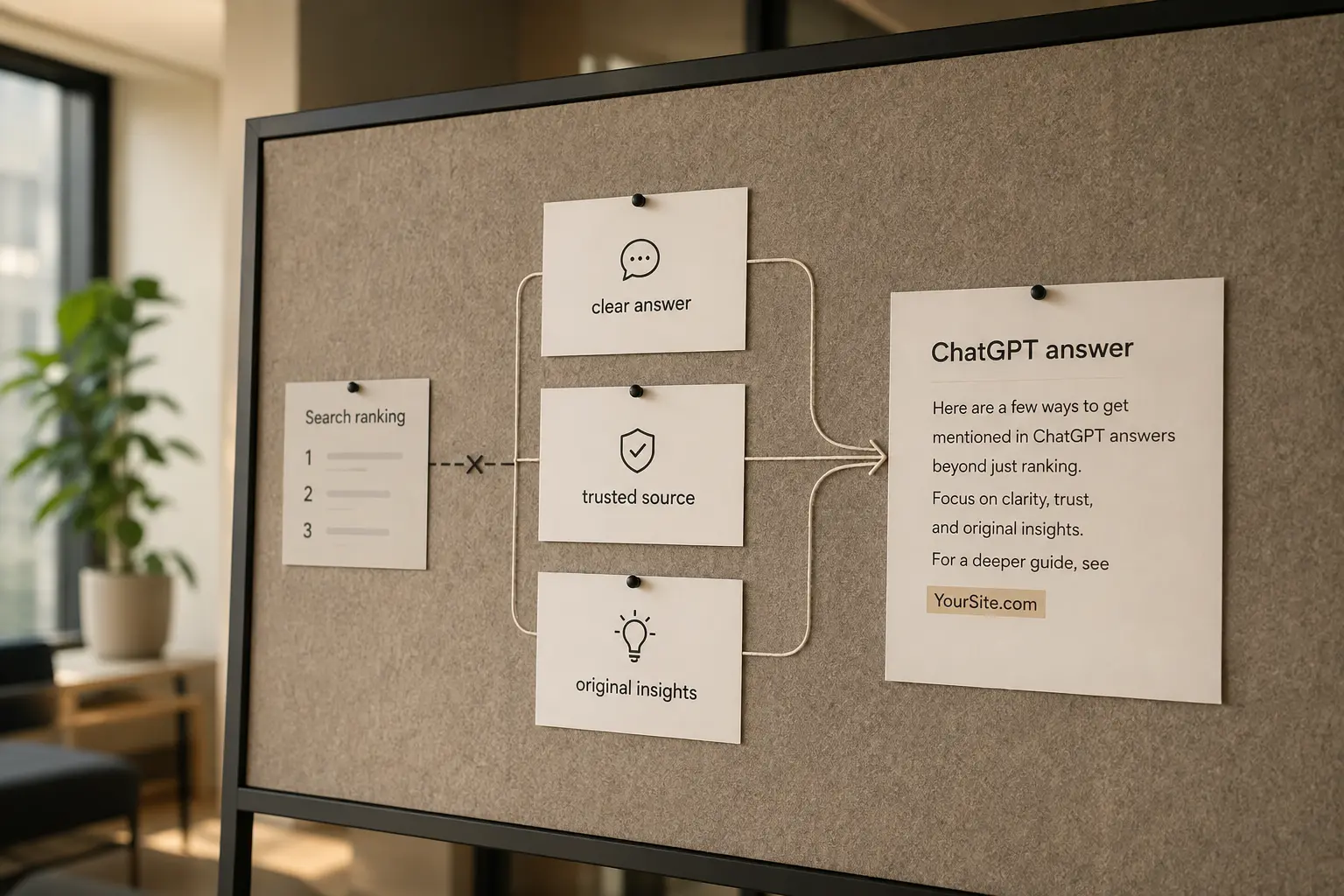
The metric that matters is AI visibility: how your content, products and expertise appear in those answers. It is no longer about ranking on page one, it is about being the answer the agent chooses.

That brings two shifts. The first is the rise of zero-click search, where people get what they need from an AI summary without visiting a site, and many publishers have felt the traffic impact. Our guide on recovering traffic lost to AI search addresses this directly. The second is the distinction between mentions and citations.

A mention is your brand appearing in a response without a link, while a citation includes one. Mentions build authority and recall in the conversational layer and often feel more credible than paid placement, functioning like digital PR, while citations drive referral traffic but are more volatile.

Both matter, and Google's AI Overviews make optimising for this consumption essential, since brands that are not structured for it risk disappearing.

The open agentic web

We are entering what Microsoft and others call the open agentic web, where agents perform tasks and make decisions across personal, organisational and enterprise contexts. That changes web strategy fundamentally.

Sites need to respond intelligently in real time, facilitating clean consumption by agents while still delivering value to human visitors. The brands that design for both early will hold a real advantage as agents take on more of the discovery journey.

How to make your brand the answer agents choose

Staying visible means rethinking how you create and structure content. A few moves matter most.

Build for modularity and structured data so agents can parse, understand and deliver your content as answers. Treat your site as a resource library for machines, not just a destination for people, and lean on structured data for AEO.

Adopt a Q&A and intent-led structure that addresses real questions with clear, concise answers, aligned with search intent. Strengthen E-E-A-T through expert-authored content, credible sources and quality partnerships, as covered in our guide to E-E-A-T for AEO.

Keep a consistent brand voice even as agents personalise delivery, so tailored content still feels unmistakably yours, which also builds the trust we cover in how AEO builds brand trust.

Reinforce entity clarity and consistency across the web through entity optimisation, and for local brands, keep listings and reviews sharp via our Australian business listings guide. Writing content designed to be cited by LLMs ties it together, and understanding how ChatGPT selects sources explains why.

Measuring and maintaining AI visibility

Agent-driven search evolves quickly, so treat visibility as an ongoing discipline rather than a one-off project. Test how agents reference your brand across platforms, study how those answers change, and adjust your content accordingly.

Track mentions, citations and sentiment, and connect them to outcomes using our breakdown of how to measure AEO ROI. The brands that monitor and adapt continually are the ones that hold their place as agents retrain and shift.

Common mistakes to avoid

A few patterns hold brands back. Optimising only for human readers and keywords, when agents reward conversational, structured answers. Chasing citations while ignoring unlinked mentions, which often carry more authority. Publishing content agents cannot easily parse, so it never makes the answer.

Letting brand voice fragment under personalisation. And treating AI visibility as a one-time fix, when the agentic web changes constantly. Designing for agents and humans together corrects most of these at once.

Preparing for what's next

AI agents are not replacing people, they are augmenting capabilities, automating workflows and reshaping how brands connect with customers. But as agents become the primary interface for search and discovery, the brands that stay visible will be those that think beyond keywords.

AEO and GEO are not passing trends, they are the foundation for how AI engines understand, interpret and recommend your brand. Start optimising for AI interpretation now: structure content for clarity, align with conversational intent, and let your expertise become the answer agents choose first.

A free AI visibility audit is the quickest way to see where you currently stand.

Implementation checklist

Use this list to audit and improve your AI visibility after reading this guide.

  • Treat your site as a structured resource library agents can parse.
  • Add JSON-LD schema so agents understand and deliver your content.
  • Structure pages as clear answers to the real questions people ask.
  • Show E-E-A-T with expert authorship, citations and credible partners.
  • Keep brand voice consistent even as agents personalise delivery.
  • Strengthen entity signals and local listings across the web.
  • Track mentions, citations and sentiment across AI platforms.
  • Re-test agent responses regularly and refresh content to stay current.

Sources and references

Primary sources, official documentation, research and SkyScale audit data cited in this article. in this article.

Frequently Asked

What is an AI agent?

Decorative

An AI agent is an autonomous system that understands context, makes decisions and completes multi-step tasks, rather than just answering scripted questions. Agents use machine learning and natural language processing to act on behalf of users or businesses in real time.

How are AI agents changing SEO?

Decorative

They are shifting the goal from ranking on a results page to being cited inside AI-generated answers. Agents favour conversational, structured, authoritative content, so visibility now depends on being the source an agent chooses, not just where your page ranks.

What is the difference between a mention and a citation in AI search?

Decorative

A mention is your brand appearing in an AI answer without a link, which builds authority and recall. A citation includes a link that can drive referral traffic. Mentions are more stable and often feel more credible, while citations are more volatile.

Is optimising for AI agents only for big brands?

Decorative

No. Businesses of any size benefit. Because the focus shifts from link authority to content relevance and clarity, smaller brands with well-structured, intent-led content can earn visibility in agent-driven search.

How does the open agentic web change my website strategy?

Decorative

It means designing for agents and humans together. Your site needs clean structure and real-time responsiveness so agents can consume it accurately, while still delivering value to human visitors who arrive through those answers.

How do I keep my brand visible as AI agents evolve?

Decorative

Treat it as ongoing. Test how agents reference you, refresh content with current information, reinforce entity and structure signals, and track mentions and sentiment so you can adapt as models retrain.

Authorship and review

Man in white shirt and patterned vest sitting in a black leather chair at a table, resting chin on fist.

Written by

Eden John

· Founder, SkyScale

 LinkedIn profile

Eden leads SkyScale's Generative Engine Optimisation practice, focused on getting brands cited inside ChatGPT, Perplexity, Google AI Overviews and Gemini.

Relevant experience: Shipped 100+ AI visibility audits across B2B SaaS, professional services and ecommerce between Q4 2024 and Q1 2026, tracking citation patterns across the four major answer engines.

Credentials: Master of Business Administration (MBA) · Founder, SkyScale · 100+ AI visibility audits · GEO, AEO and AI SEO specialist

Smiling young man with curly dark hair in a maroon T-shirt crosses his arms indoors.

Reviewed by

Lachlan McDonald

· AI Search & Data Engineering Reviewer

 LinkedIn profile

Lachlan reviews SkyScale's AI search and data engineering content, focused on technical accuracy, methodology, retrieval logic, data quality and source-evaluation claims.

Relevant experience: 6 years of experience across AI search and data engineering, reviewing technical systems and source-selection claims for accuracy, reliability and methodological soundness.

Credentials: Master of Data Science · Bachelor of Software Engineering (Honours) · AI search and data engineering specialist

Last reviewed March 27, 2026
This is the block containing the Collection list that will be used to generate the "Previous" and "Next" content. You can hide this block if you want.
Ai visibility icon

AI Visibility
Report

3 business days. No credit card required, reviewed by a human.

Real Client Results

What you can expect to gain

+1,975%

more clicks from search

Benarrivati

£2,262

revenue from ChatGPT

Avenue Cookery

Google CTR lift

Vision One

+462%

more search impressions

SkyScale

See how we did it