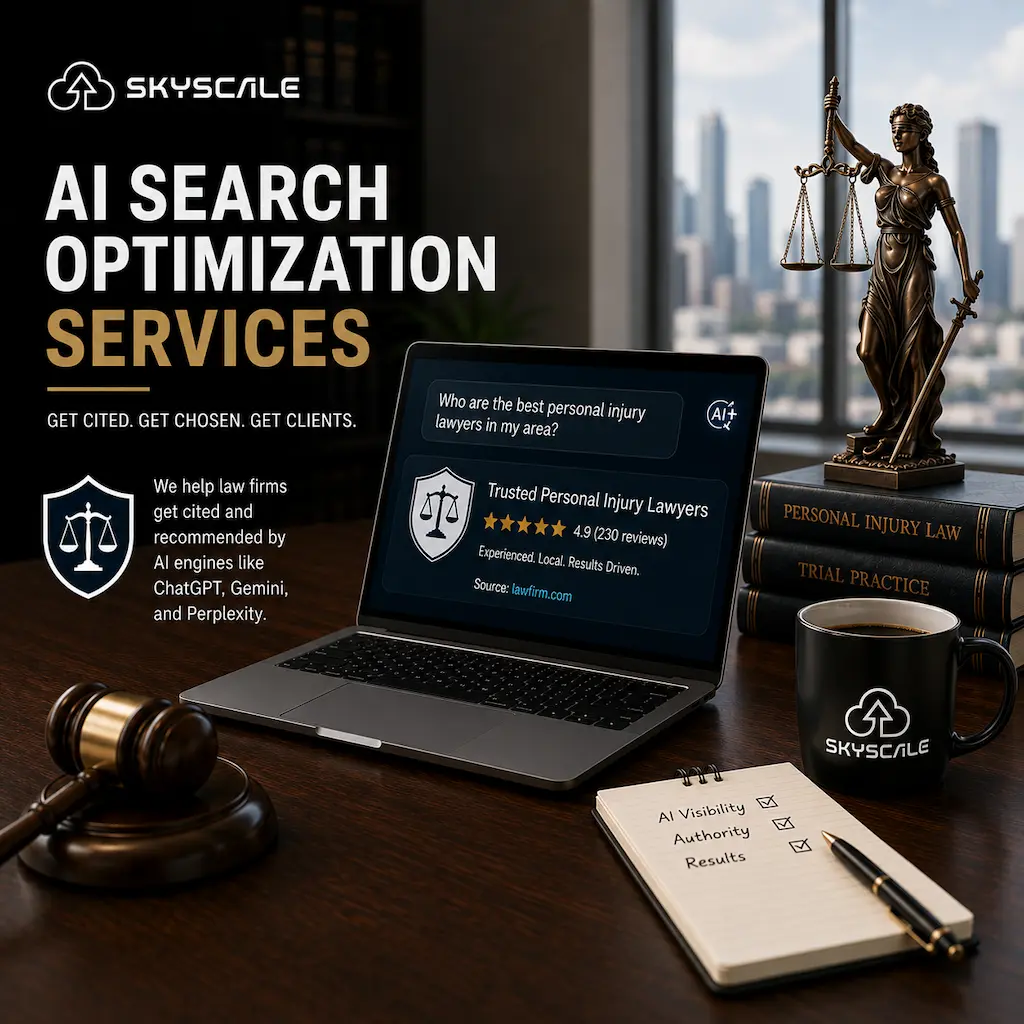


The AI revolution has arrived in search, and it's reshaping how content gets discovered, consumed, and trusted. Google's AI Overviews now appear in 13% of all desktop queries, reaching over 1.5 billion users monthly. Meanwhile, ChatGPT, Perplexity, and other AI engines are fielding billions of conversational searches that traditional SEO strategies were never designed to capture.
Here's the reality: purely AI-generated content has become a dead-end strategy. Search engines and Large Language Models (LLMs) are increasingly skilled at detecting low-quality, machine-written text that lacks depth, originality, and human insight. At the same time, human-only content strategies struggle to keep pace with the speed and scale modern digital marketing demands.
The solution? A hybrid approach that combines AI efficiency with human expertise. This strategy doesn't just help you rank in traditional search, it positions your brand to be cited, recommended, and trusted by AI platforms that are rapidly becoming the primary gatekeepers of information discovery.
The Rise of AI in SEO
AI has transformed SEO from a manual, time-intensive discipline into a data-driven, scalable operation. Modern AI tools can analyse thousands of competitor pages in seconds, identify high-value keyword opportunities, generate content briefs, and even produce first drafts optimised for both readability and search intent.
The benefits are clear:
- Speed: What once took days of research and drafting can now be completed in hours.
- Efficiency: AI automates repetitive tasks like meta tag generation, technical audits, and keyword clustering.
- Data analysis: AI tools surface insights from vast datasets that human analysts might miss, revealing emerging trends and ranking opportunities.
For agencies managing multiple clients or brands scaling content production, AI has become essential infrastructure. It frees strategists and writers to focus on higher-level work while maintaining consistent output across channels.
The Limitations of AI-Only SEO
Despite its power, AI has critical blind spots that make purely automated content strategies risky and ultimately unsustainable.
Lack of originality: AI synthesises existing information but struggles to generate truly novel insights, personal experiences, or expert perspectives. Content that feels recycled or generic fails to connect with readers and often underperforms in rankings.
Potential for errors: AI tools can confidently present incorrect or outdated information, a phenomenon known as "hallucination." Without human fact-checking, these errors damage credibility and violate Google's E-E-A-T (Experience, Expertise, Authoritativeness, Trustworthiness) standards.
Detection by search engines: Google and other platforms are becoming increasingly sophisticated at identifying low-value AI content. Studies show that human-written articles drive 5.4× more organic traffic than AI-only pieces, a gap that reflects both algorithmic detection and genuine reader preference.
Generic brand voice: AI-generated content often lacks the nuance, personality, and emotional resonance that builds brand loyalty and trust. Without human editing, it risks sounding interchangeable with every other piece of content flooding the web.
The data reinforces this reality. Research shows that 70% of queries entered into ChatGPT and similar tools are more complex than traditional search queries, yet many brands relying solely on AI fail to capture these high-intent audiences because their content lacks depth and authenticity.
Blend AI efficiency with real expertise to build authority, earn AI citations, and redefine what SEO success looks like in the age of intelligent search.
.png)
The Importance of Human SEO
Humans bring irreplaceable qualities to content creation that no AI tool can fully replicate.
Creativity and storytelling: The best content doesn't just inform, it engages, persuades, and inspires. Humans craft narratives that resonate emotionally, build trust, and create memorable brand experiences.
Strategic thinking: SEO isn't just about ranking for keywords, it's about aligning search visibility with broader business goals. Humans can interpret shifting market conditions, adapt strategies during algorithm changes, and make nuanced decisions about whether to prioritise awareness content or conversion-focused keywords.
Critical judgment: AI lacks the lived experience and industry expertise required to assess credibility, verify facts, and ensure accuracy. Human editors catch errors, add context, and ensure content meets professional standards.
Authentic expertise: Google's E-E-A-T framework explicitly values genuine experience and demonstrated expertise. Content that incorporates first-hand knowledge, case studies, and expert quotes consistently outperforms generic AI output.
The challenge is that human-only strategies are difficult to scale. Quality content takes time, research, and skilled writing, which drives up costs and limits production capacity. This is precisely why the hybrid approach has emerged as the optimal solution.
The Hybrid Approach: AI + Human SEO
The most successful content strategies in 2026 blend AI's efficiency with human expertise, creating a workflow where each enhances the other's strengths.
How the hybrid model works:
AI handles the foundation: Use AI tools for keyword research, competitor analysis, content briefs, and first drafts. Let machines do the heavy lifting of data processing and initial structure.
Humans add the value: Editors refine tone, inject original insights, verify facts, and ensure brand alignment. Writers add storytelling, expert commentary, and authentic experiences that connect with readers.
Optimise for dual visibility: Structure content to rank in traditional search while being easily parsed and cited by AI platforms. This means clear headings, direct answers to questions, and conversational phrasing that AI engines can extract and recommend.
Practical implementation:
- Start with AI-powered research: Use tools to identify content gaps, analyse search intent, and generate topic clusters.
- Create structured briefs: Let AI draft outlines based on top-ranking content, but have strategists refine them with unique angles.
- Draft with AI, polish with humans: Generate initial content quickly, then have experienced writers add depth, personality, and brand voice.
- Fact-check and verify: Human editors must review all claims, statistics, and examples to ensure accuracy.
- Optimise strategically: Use AI to identify SEO opportunities, but let humans make final decisions about messaging and positioning.
This approach delivers the best of both worlds: the scale and speed of AI with the authenticity and strategic insight only humans can provide.
Optimising for Question-Based Searches
The shift toward conversational AI search means traditional keyword optimisation alone is no longer enough. Users are asking longer, more complex questions and expecting direct, helpful answers.
To capture this audience:
- Structure content around questions: Use headings phrased as questions that mirror how users actually search.
- Answer immediately: Lead with clear, concise answers before elaborating with supporting details.
- Use natural language: Write conversationally, as if speaking directly to a reader, asking for advice.
- Incorporate FAQ sections: These help AI platforms extract and cite your content in response to user queries.
- Leverage structured data: Schema markup helps search engines and AI tools understand and surface your content more effectively.
Content optimised for question-based searches performs better across both traditional search and AI platforms, maximising your visibility regardless of where users begin their research journey.
Building Your Hybrid Content Strategy
The future of SEO belongs to brands that master the hybrid approach. AI will continue advancing, but it will never fully replace the creativity, judgment, and authentic expertise that humans provide. The organisations that thrive will be those that strategically combine both, using AI to scale efficiently while maintaining the human touch that builds trust and drives meaningful engagement.
Start by auditing your current process. Where can AI save time without sacrificing quality? Where must humans lead to ensure credibility and connection? Build workflows that leverage AI for speed while preserving human oversight for strategy, brand voice, and accuracy.
The hybrid model isn't just a competitive advantage, it's becoming essential for survival in an AI-first search landscape. Brands that implement these strategies now will build the SEO foundations that protect and grow their market share as the digital landscape continues to evolve.
The question isn't whether to adopt hybrid content strategies. It's how quickly you can implement them to stay visible, relevant, and trusted in the era of AI-powered search.
Key Features
- Explains why AI-only content fails modern SEO standards.
- Shows how hybrid strategies combine AI and expertise.
- Highlights human creativity’s role in building trust.
- Details AI tools enhancing research and content workflows.
- Teaches optimization for complex conversational search queries.
Frequently Asked Questions?

A hybrid content strategy combines human creativity with AI-driven insights to create content that is engaging for users while optimized for search engines. It leverages the strengths of both approaches to deliver relevant, impactful, and scalable content.
With the increasing prevalence of AI in search engines, user intent and content relevance have become key factors for ranking. Hybrid strategies ensure your content aligns with both human expectations and algorithmic priorities, keeping your brand visible and competitive.
AI tools can analyze vast amounts of data to uncover trends, predict consumer behavior, and suggest keywords or topics that resonate with your audience. This allows you to create content that is both timely and targeted.
While AI can provide insights and recommendations, human creativity adds authenticity, emotional connection, and storytelling – elements critical for building trust and engagement with your audience.
Absolutely! Hybrid strategies are scalable and accessible for businesses of all sizes. Small businesses can use AI tools to identify niche opportunities and craft high-quality content that sets them apart in competitive markets.
By combining AI's predictive capabilities with human-driven quality control, hybrid strategies produce content that satisfies both user intent and technical SEO requirements. This dual approach increases rankings, click-through rates, and user satisfaction.