.svg)
Quick summary
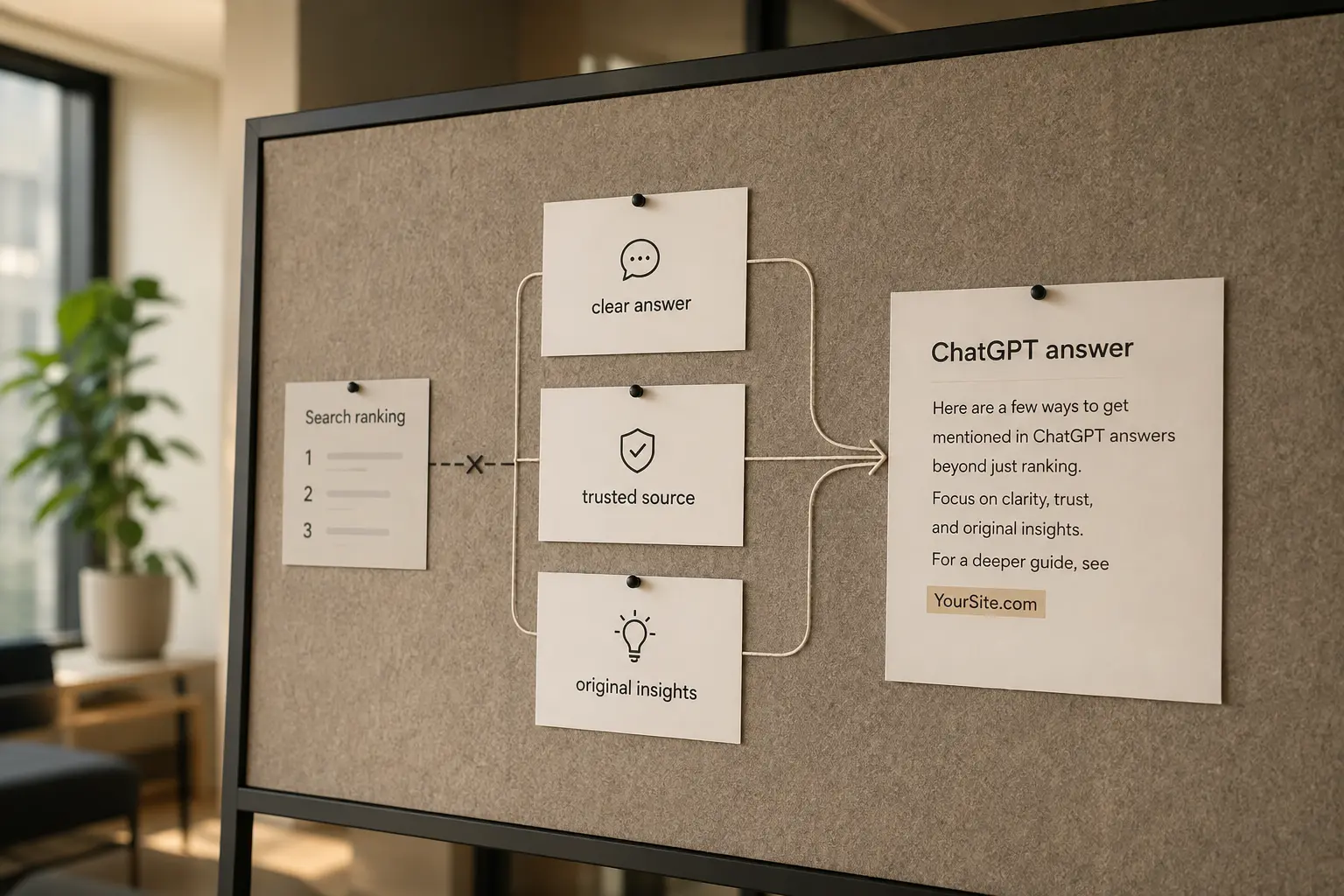
Generative AI search rewards content that is clear, well-structured, authoritative and semantically rich. Optimising for it means making your expertise easy for large language models to understand, interpret and cite, not gaming an algorithm but becoming the trusted answer.
- Lead with clear, direct answers in plain language.
- Structure content with headings, lists and on-page FAQs.
- Add schema so AI can interpret and cite your content accurately.
- Demonstrate E-E-A-T with original data and credible sources.
- Optimise for meaning and intent, not keyword repetition.
.svg)
Who this is for
This guide is written for teams adapting their content so AI search engines surface it.
- Content and SEO leads: wanting a practical checklist for generative AI visibility.
- Founders and marketers: ensuring their expertise is cited in AI answers.
.svg)
Evidence base
Drawn from SkyScale's AEO and GEO work across 200+ audits and client programs completed between October 2024 and May 2026, alongside published research, across B2B SaaS, professional services and ecommerce, including Australian businesses.
.svg)
Methodology
Tested which content was cited and surfaced across ChatGPT, Gemini, Perplexity and Google AI Overviews, then compared structure, schema, authority and freshness against public data.
.svg)
Limitations
AI responses are probabilistic and the landscape shifts fast. Results vary by model, location, device and freshness. Referral, click and conversion figures vary widely between studies and should be treated as directional.

Implementation checklist
Use this list to audit and improve your AI visibility after reading this guide.
- Lead each section with a direct, plain-language answer.
- Use question-led H2s and H3s, lists and comparison tables.
- Add FAQPage, HowTo, Product, Article and media schema.
- Cite credible sources, including .gov.au and .edu.au where relevant.
- Publish original research and data that AI cannot replicate.
- Build topic clusters with consistent internal linking.
- Keep your site fast, mobile-first and crawlable, with green Core Web Vitals.
- Track AI citations and mentions, not just clicks and rankings.
Sources and references
Primary sources, official documentation, research and SkyScale audit data cited in this article.
- AI referral traffic and optimization — Plausible Analytics
- Microsoft Clarity — Microsoft
- AnswerThePublic — AnswerThePublic
- business.gov.au — Australian Government
- Lighthouse overview — Google Chrome Developers
- YouTube — YouTube
Frequently Asked
How does generative AI search change content optimisation?

It shifts the goal from ranking pages to being understood, trusted and cited by AI. Clarity, structure, schema, authority and semantic relevance now carry the most weight, since AI synthesises answers from sources it can confidently interpret rather than simply listing links.
Can I adapt my existing SEO content for generative AI?
Yes. Most content can be updated by improving clarity, adding direct answers up top, implementing structured data, strengthening authority signals, and ensuring semantic alignment. You rarely need a full rebuild, just an enhancement focused on interpretability and trust.
Is keyword research still relevant for AI search?
Keyword research remains useful, but the focus shifts to user intent and conversational questions rather than isolated keywords. Tools that surface question clusters help you cover the full intent behind a query, which is what generative AI rewards.
What schema should I use for generative AI search?
Apply FAQPage, HowTo, Product and Article schema where relevant, extend it to help-centre content, and use ImageObject and VideoObject for media. Schema helps AI categorise and accurately cite your content, so its absence forces engines to guess.
How do I measure success in generative AI search?
Track brand mentions and citations in AI answers, traffic quality and engagement, and topical authority across clusters, alongside conversions. Because AI-referred visitors often convert well, weigh value metrics over raw click volume.
Why does authority matter so much for AI citations?
AI prioritises credible, trustworthy sources, evaluating experience, expertise, authoritativeness and trust before citing content. Original data, clear credentials and reputable references signal the authority AI looks for, making your content more likely to be chosen.
Authorship and review

Written by

Reviewed by
Lachlan McDonald
· AI Search & Data Engineering Reviewer
.svg)

.svg)


.svg)
.svg)
.svg)
.svg)
.svg)