.svg)
Quick summary
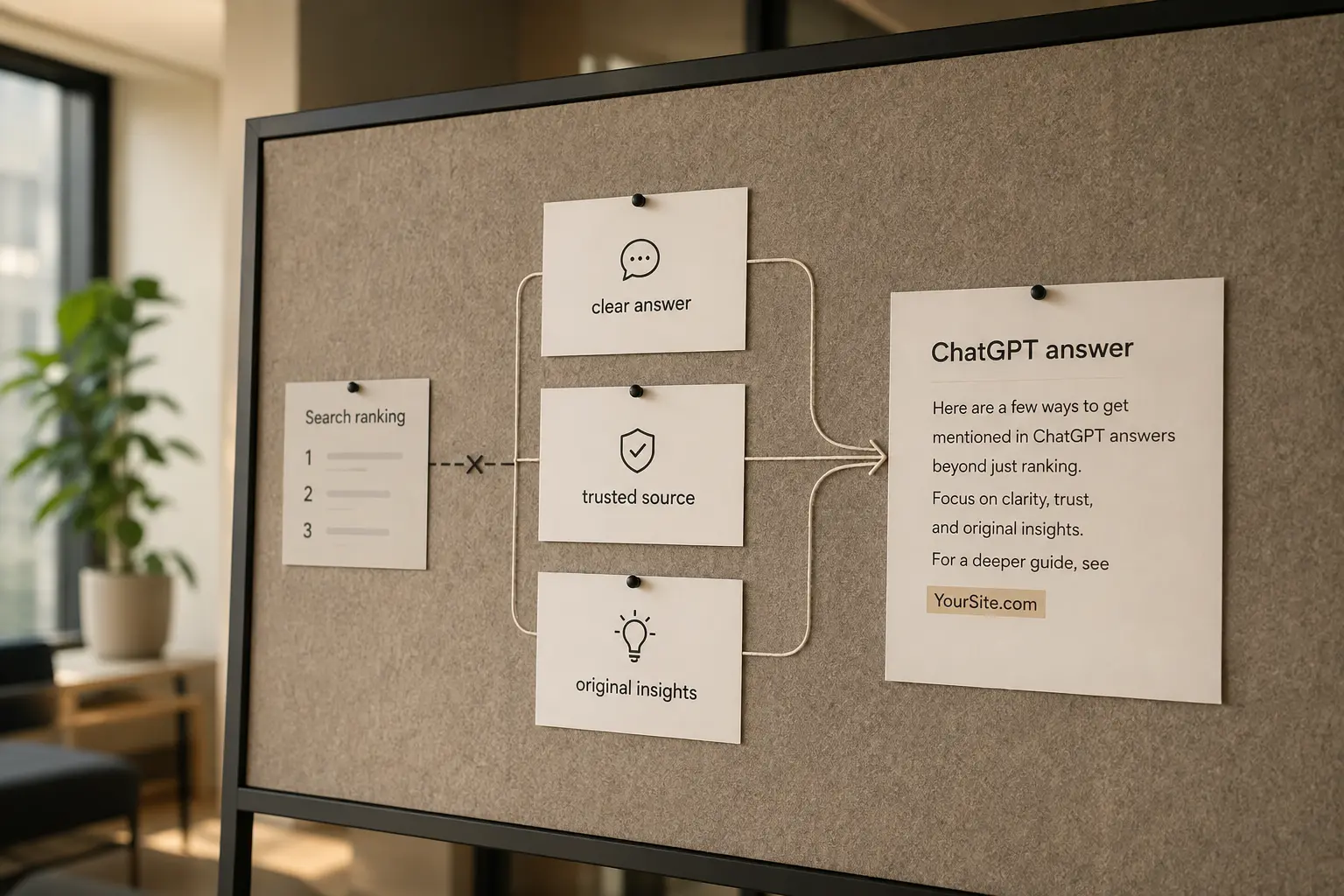
AI cites your competitor because the wider web talks about them more, groups them with the category leaders, and understands them as a clear, trusted entity. It is rarely about who published more content or built more links. Close the gap by earning mentions and co-mentions, not by writing more.
- Citations track brand mentions, not blog volume
- Backlinks and content count matter far less than expected
- Being grouped with category leaders drives recommendations
- Most of your market is invisible too, so the gap is winnable
- The fix is earned visibility across the web, not on-site alone
.svg)
Who this is for
This is for owners and marketers watching a competitor get named in AI answers while they stay invisible, and wanting the real reason rather than a guess.
- Marketers who have published plenty and still are not cited
- Owners who need to know what their rival is doing that they are not
.svg)
Evidence base
Across 200+ AI visibility audits we ran between October 2024 and June 2026, the pattern was consistent: the businesses AI cited were not the ones with the most pages or the biggest backlink profiles. They were the ones the rest of the web talked about, grouped with the names everyone knows, and described consistently everywhere a model looked.
.svg)
Methodology
For each audit we asked the major assistants the questions a buyer would use, recorded which brands were named, and then traced why. We compared the cited brands against the invisible ones on mentions, co-mentions, topical coverage and entity clarity, looking for what actually separated the two groups rather than what the industry assumed.
.svg)
Limitations
AI answers are non deterministic, so the same question can name different brands on different days, and correlation in public studies is not proof of causation. We report the patterns that held up repeatedly across our audits and independent research, and we avoid promising that any single fix flips a result on a fixed timeline.

Implementation checklist
Use this list to audit and improve your AI visibility after reading this guide.
- Confirm your competitor's lead with a fixed set of buyer questions across the assistants
- Audit where they are mentioned across the web that you are not
- Fix your entity first: consistent name, category and facts everywhere
- Pursue placement in comparisons and round-ups alongside category leaders
- Build co-mention density through digital PR and partnerships, not just links
- Go deep on your core topic across a full cluster of related questions
- Track your citation share versus the competitor month over month
- Watch branded search demand as a signal that recognition is building
Sources and references
Primary sources, official documentation, research and SkyScale audit data cited in this article.
- Top brand visibility factors in ChatGPT, AI Mode and AI Overviews (75k brands) — Ahrefs
- AI visibility is a topic-level game: a study of 50,000 brands in ChatGPT — Semrush
- Why brand authority beats topical authority in AI search — Search Engine Land
- What co-mentions reveal about the AI recommendation gap — Search Engine Land
- 90% of brands have zero AI search mentions, new study finds — Search Engine Journal
- Entity linking — Wikipedia
Frequently Asked
Why does AI keep citing my competitor and not me?

Because the wider web mentions them more, groups them with the category leaders, and understands them as a clear, established entity. Models reflect patterns that already exist outside your website, so your competitor is being named because, in the data the model draws on, they are the more recognised answer. It is a gap you can close, not a permanent verdict.
Won't more blog posts fix it?
Usually not on their own. Studies of tens of thousands of brands found that content volume and backlinks correlate weakly with AI visibility, while branded mentions across the web correlate strongly. Publishing more of the same rarely moves the needle. Earning mentions and co-mentions beyond your own site does.
What are co-mentions and why do they matter?
Co-mentions are the times your brand appears alongside others, especially category leaders, in third-party content like comparisons and round-ups. Research shows that being co-mentioned with the leaders predicts whether a model recommends you, often more than how well it recognises you. You want the model to keep seeing your name in the same context as the brands it already trusts.
How long does it take to close the gap?
There is no fixed timeline, because it depends on how far ahead your competitor is and how entrenched their mentions are. Entity fixes can land quickly, while building genuine mentions and co-mentions is steady work over months. Track your citation share so you can see it moving well before it shows up in leads.
Is it too late if a competitor already dominates?
Rarely. Around 90% of brands have almost no AI visibility at all, so most categories are wide open beyond the one or two leaders. You may be behind a dominant rival, but you are ahead of the invisible majority, and acting while the space is uncrowded is far cheaper than breaking in later.
What should I fix first?
Your entity clarity: make sure your name, category and core facts are consistent everywhere a model looks. That ensures every mention you earn actually attaches to you rather than leaking away. Once the foundation is clean, build mentions and co-mentions, then deepen your topical coverage to hold the position.
Authorship and review

Written by

Reviewed by
Lachlan McDonald
· AI Search & Data Engineering Reviewer
.svg)

.svg)


.svg)
.svg)
.svg)
.svg)
.svg)